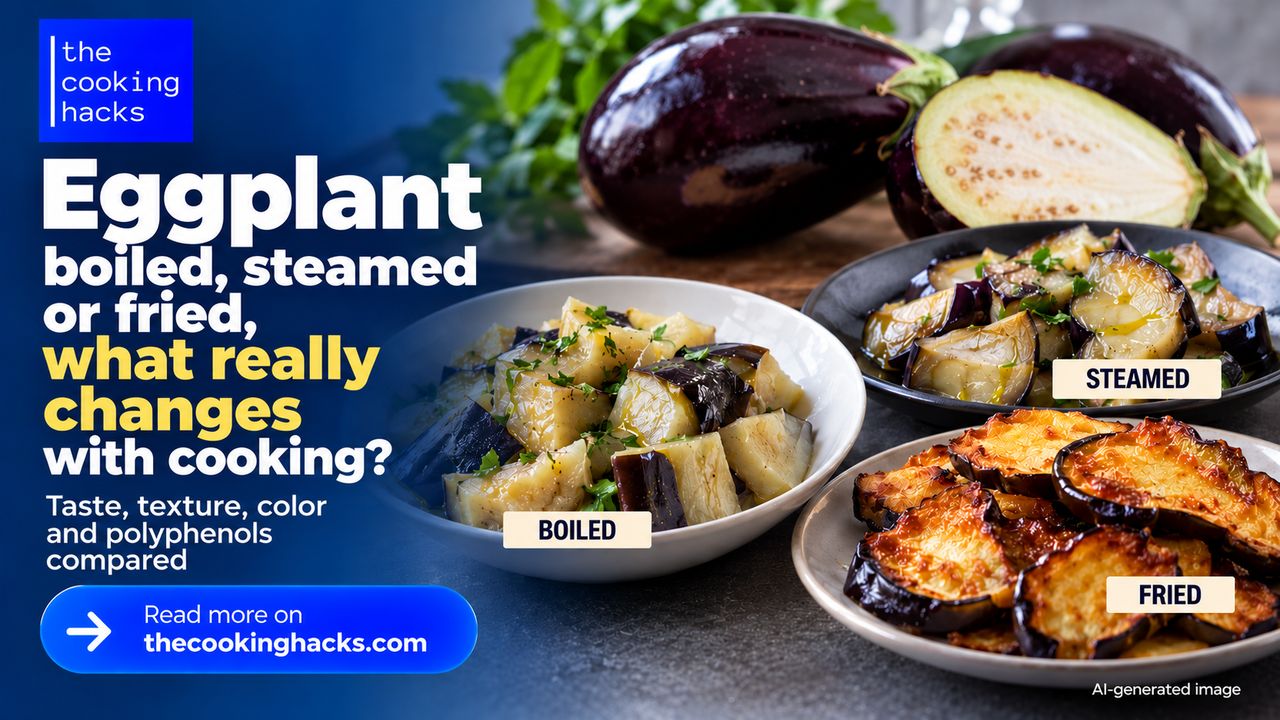
Boiling, steaming or frying the same vegetable can produce very different results on the plate. With eggplant — known as aubergine in the UK — those differences include texture, color, astringency and perceived sweetness. But they do not necessarily mean that its measured chemical composition changes in the same way.
A study published in the International Journal of Gastronomy and Food Science compared four methods: boiling, steaming, deep frying and superheated-steam cooking.
The findings are useful because they separate two things that are easily confused: what people taste and what laboratory measurements actually show.
Fried eggplant was the clear favorite in the taste test
The sensory part of the study involved 55 untrained participants, mainly young adults. Deep-fried eggplant received significantly higher overall liking scores than boiled, steamed or superheated-steam samples. There was no significant difference in overall liking among those other three methods.
Participants were also less likely to describe the fried eggplant as astringent and more likely to identify toasted, oily and sweet characteristics.
That does not mean frying simply removed the compounds associated with astringency. The researchers found no significant difference in total polyphenol content among the cooking methods.
Their results instead suggest that the oil and the sensory changes caused by frying may have altered how astringency was perceived. ([sciencedirect.com][2])
It tasted sweeter, but the measurements tell a more complicated story
Fried eggplant was more frequently perceived as sweet, yet total soluble solids did not differ significantly among the cooking methods.
One explanation proposed by the researchers concerns moisture loss. Deep frying reduced the eggplant’s water content, which may have made water-soluble sugars more noticeable to the palate even without a significant difference in the overall measurement of soluble solids.
This distinction matters. A food tasting sweeter does not automatically mean the study found that it contained significantly more sugar.
Texture and color changed too
Superheated steam produced particularly soft eggplant while better preserving the brightness of the flesh and a vivid purple peel.
This technique should not be confused with ordinary home steaming. In the experiment, superheated steam was produced by dedicated equipment at 120°C, while conventional steaming was performed separately at 100°C.
The deep-fried samples were cooked in rapeseed oil at 170°C, or about 338°F, and lost considerably more moisture. Boiled samples moved in the opposite direction, taking up water and ending with the highest moisture content.
Those physical changes help explain why the same ingredient can have such different mouthfeel and flavor depending on how it is cooked.
Does the study tell us the best way to cook eggplant?
Not really — and especially not from a nutritional point of view.
The study shows that deep frying produced the highest liking scores under the experimental conditions, partly alongside lower perceived astringency and the development of flavors that participants enjoyed.
Superheated steam offered another set of characteristics, particularly softness and color retention. Boiling and conventional steaming produced their own sensory profiles.
Which method works best in the kitchen therefore depends on what you want from the dish rather than on a universal ranking.
There are important limitations as well. The experiment used one Japanese cultivar of purple eggplant, and the sensory panel consisted mostly of young adults. The researchers therefore did not demonstrate that every eggplant variety or every group of consumers would respond in exactly the same way.
The more useful takeaway is that cooking can substantially change the way eggplant tastes, looks and feels without every sensory difference being mirrored by a significant difference in the chemical measurements tested in the study.
If you don't want to miss the important news, subscribe to The Cooking Hacks Telegram channels:
- Food Recall UK, receive news about food recalls to have a safe pantry
- Offers this week UK, to find out what are the latest offers from supermarkets