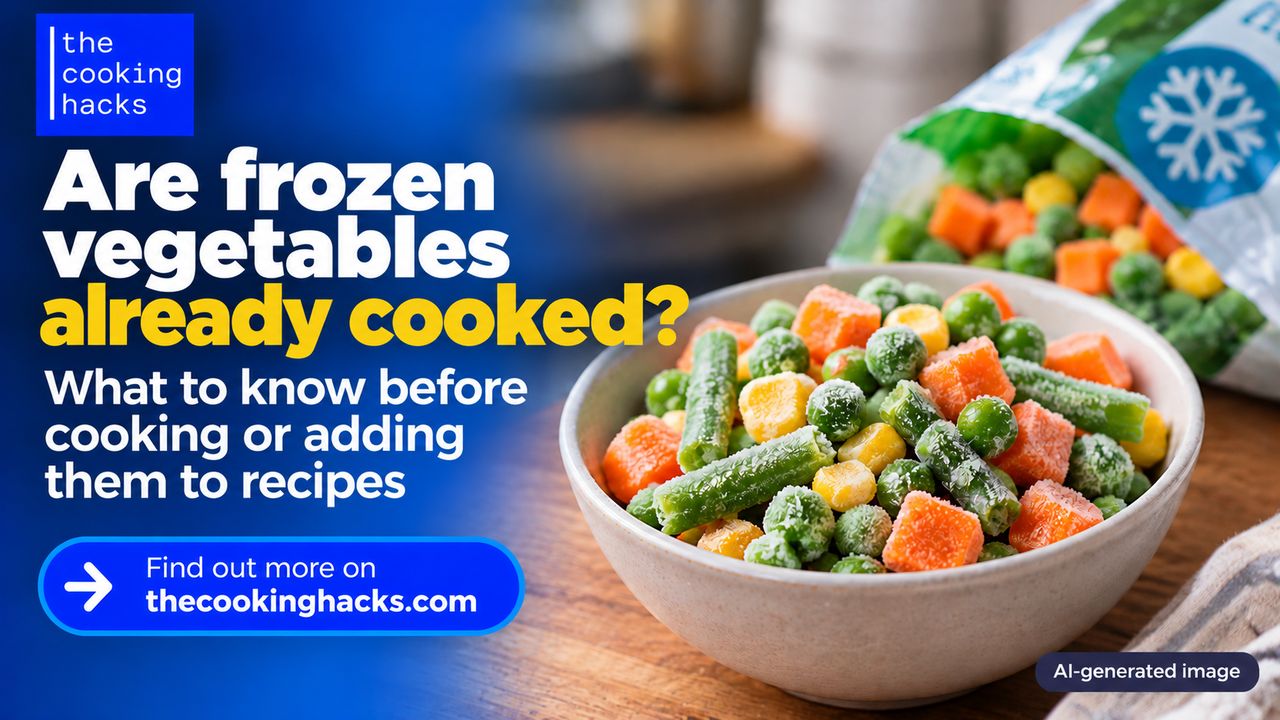
Frozen vegetables are not necessarily fully cooked, even when they have been blanched before freezing. Products such as peas, carrots, spinach and mixed vegetables may have undergone a brief heat treatment during processing, but that does not automatically make them safe to eat without further cooking. The preparation instructions on the package are the best place to check.
Why are vegetables blanched before freezing?
Blanching is a short treatment with hot water or steam, followed by cooling and freezing.
Manufacturers use it mainly to slow down enzymes that can affect a vegetable’s colour, flavour and texture during storage.
The European Food Safety Authority (EFSA) explains that blanching helps preserve food quality. However, it should not be treated as proof that the vegetables are fully cooked or ready to eat.
For example, frozen spinach may have been blanched during manufacturing but still require cooking before it can be served.
Does freezing kill bacteria in vegetables?
No. Freezing does not sterilise food. It prevents or slows the growth of many microorganisms, but some bacteria can survive.
One concern is Listeria monocytogenes, which can contaminate vegetables during growing, processing or handling.
This does not mean that every bag of frozen vegetables contains harmful bacteria. It means that freezing alone should not be relied upon to make vegetables safe for raw consumption.
The UK’s Food Standards Agency advises that frozen vegetables requiring cooking must be thoroughly cooked before eating, including when they will later be used in cold dishes.
How should you cook frozen peas, spinach and mixed vegetables?
Many frozen vegetables can be cooked directly from frozen without thawing first.
For frozen peas or carrots, follow the cooking method and timing specified on the package. When using a saucepan or frying pan, make sure the vegetables heat evenly.
Frozen spinach often comes in compact portions. These need enough cooking time for the centre to become thoroughly hot, not just the outside.
For mixed vegetables used in soups, allow the entire mixture to cook as directed rather than assuming the vegetables are ready as soon as the liquid begins to simmer.
There is no single cooking time suitable for every frozen vegetable. The size of the pieces, their processing and the cooking method all matter.
Proper frozen food storage is another important part of keeping products in the condition intended by the manufacturer.
Can frozen vegetables be added to salads or smoothies?
Only when the product’s preparation instructions allow it.
If the package says the vegetables must be cooked, cook them thoroughly before adding them to a cold salad. Cool them promptly using safe food-handling practices and refrigerate them until serving.
Simply leaving frozen peas or sweetcorn to thaw on the counter is not an adequate substitute for cooking.
For a quick salad without a cooking step, canned vegetables labelled as ready to eat can be a convenient alternative.
This distinction is particularly useful when preparing rice salads, pasta salads and meal-prep dishes.
How can you tell whether frozen vegetables are ready to eat?
Check the package for wording such as “cook before eating”, “cook from frozen” or an explicit indication that the product is ready to eat.
Terms such as “blanched” and “partially cooked” describe processing steps, but do not necessarily establish that the product is safe to consume without further heating.
For frozen vegetables that require cooking, follow the manufacturer’s directions even when the final dish will be served cold.
The key difference is not whether vegetables are fresh or frozen. It is whether they are intended to be cooked or are specifically ready to eat.
Are frozen vegetables already cooked?
Not necessarily. Some frozen vegetables are blanched during processing, but that does not automatically make them ready to eat. Always check the package instructions.
Do you need to thaw frozen vegetables before cooking?
Not always. Many frozen vegetables can be cooked straight from frozen. Follow the cooking method and timing given by the manufacturer.
Can you eat frozen peas without cooking them?
If the package says to cook them before eating, no. Thawing frozen peas does not replace the required cooking step.
Does freezing kill bacteria on vegetables?
No. Freezing slows or stops the growth of many microorganisms, but some bacteria can survive. Freezing does not sterilise vegetables.
If you don't want to miss the important news, subscribe to The Cooking Hacks Telegram channels:
- Food Recall UK, receive news about food recalls to have a safe pantry
- Offers this week UK, to find out what are the latest offers from supermarkets