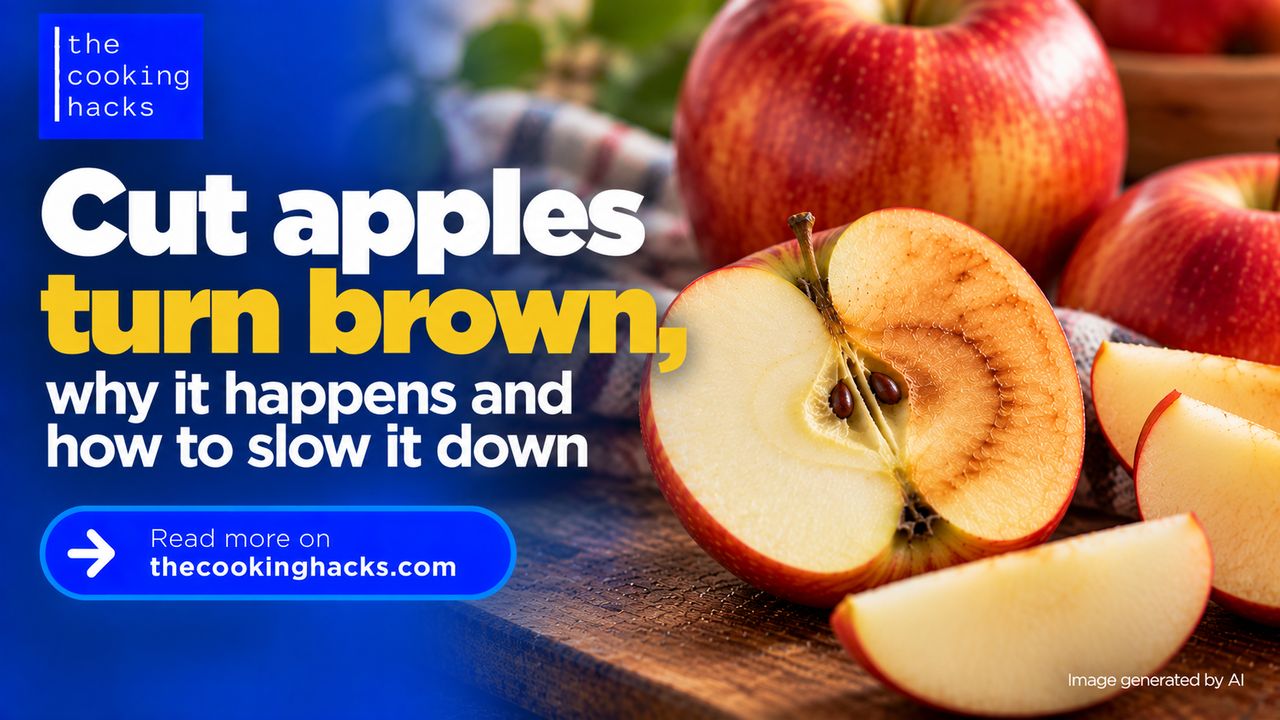
Cut an apple for a snack, lunch box or fruit salad and its pale flesh can start turning brown surprisingly quickly. It may look less appetising, but browning alone does not mean the apple has spoiled. The main process involved is enzymatic browning, which begins when cutting damages the apple’s cells and exposes the inside of the fruit to oxygen.
A recent scientific review of fresh-cut apple preservation identifies enzymatic browning, microbial contamination and loss of texture as distinct problems affecting cut apples. That distinction matters at home: a change in colour is not the same thing as microbial spoilage.
Why do apples turn brown after you cut them?
Inside an intact apple, cellular structures keep different compounds apart. Cutting, peeling or biting into the fruit breaks those structures and exposes the damaged tissue to air.
An enzyme called polyphenol oxidase, usually shortened to PPO, can then act on phenolic compounds naturally present in the fruit when oxygen is available. The reactions that follow eventually produce the brown pigments visible on the cut surface.
So while we commonly say that an apple has “oxidised”, the more precise term is enzymatic browning. Oxygen is essential, but the visible colour change also depends on enzymes and compounds already present in the apple.
Does a brown apple mean it has gone bad?
No. Enzymatic browning is primarily a colour and quality change, not proof that the apple has become unsafe to eat.
An apple slice can therefore be brown on the surface shortly after cutting and still be perfectly usable. That is different from an apple showing mould, an unusual smell or obvious deterioration in texture.
Storage still matters. Saying that browning itself is not spoilage does not mean cut apples can be left at room temperature indefinitely and judged by colour alone.
This distinction is useful for reducing unnecessary food waste too: a slightly browned apple does not need to go straight into the bin simply because it no longer looks freshly cut.
Does lemon juice really keep apples from turning brown?
Yes, it can slow browning, although it will not stop the process forever.
Lemon juice makes the surface more acidic, which creates less favourable conditions for the enzyme involved in browning. It also contains ascorbic acid, or vitamin C, which can interfere with the chemical reactions that produce brown pigments.
The effect is supported by experimental research. A study of fresh-cut Fuji apples found that ascorbic acid inhibited mechanisms associated with polyphenol oxidase and reduced browning.
There is no need to reproduce laboratory concentrations in your kitchen. For an apple that only needs to stay appealing for a few hours, a small amount of lemon juice over the cut surfaces is a much more practical option. The main downside is straightforward: too much lemon will change the flavour.
Can water help keep cut apples from browning?
Water can help for short-term preparation because it reduces direct exposure of the cut surface to air. Adding a little lemon juice combines that physical effect with a more acidic environment.
But soaking apple slices should not be confused with long-term preservation. The aim is simply to slow a visible quality change for a short period, not to make cut fruit last indefinitely.
Once the apples are ready, drain them if necessary and keep them protected and chilled until they are eaten.
Should cut apples be refrigerated?
Yes, if they are not going to be eaten straight away. Preventing browning and storing cut fruit correctly are related but separate issues: lemon juice helps with appearance; refrigeration is about storage.
For US readers, the FDA advises refrigerating produce that is bought pre-cut or packaged and stresses clean hands, utensils and preparation surfaces when handling fresh produce.
For UK readers, the same practical principle applies: keep prepared foods properly chilled and avoid cross-contamination. The specific official guidance can differ between the two countries, which is why UK and US food-safety rules should not be treated as interchangeable.
For whole fruit, the decision can be different. We have looked separately at which fruits belong in the fridge and which can stay on the counter, because storage before cutting depends on the fruit and its stage of ripeness.
Do all apple varieties brown at the same speed?
No. Two apples cut at exactly the same time can change colour at noticeably different rates.
Variety, ripeness, enzyme activity and the concentration of phenolic compounds can all affect browning. This means a variety that turns brown quickly is not necessarily older or less fresh than one that remains pale.
It is also one reason scientific results obtained with a particular cultivar cannot automatically be converted into an exact rule for every apple in the supermarket.
Should you wash an apple before slicing it?
Yes. Wash fresh apples before cutting them, while also remembering that washing and browning are separate questions.
Washing helps remove dirt and can reduce some residues on the surface, but it cannot guarantee that every pesticide residue is removed. We explored that distinction in our guide to whether washing fruit and vegetables can reduce pesticide residues.
After washing, prepare the apple with clean hands and utensils. Once it has been cut, keep it protected and chilled if it is not being eaten immediately.
Does keeping apples in the fridge destroy their vitamins?
This is another issue that is easy to mix up with browning. The colour change on a cut surface does not tell us how much nutritional value remains in the fruit.
Some nutrients, particularly vitamin C, can change during storage, while others are more stable. But this does not mean fruit becomes nutritionally worthless after spending some time in the refrigerator. We looked at this in more detail in our article on what happens to vitamins in fruit and vegetables during storage.
In practical terms, correctly storing and actually eating the apples you have bought is generally more useful than throwing them away because they are no longer visually perfect.
The simplest way to prepare apples ahead of time
If you need apple slices for a lunch box, snack or fruit salad later in the day, there is no need for a complicated preservation treatment.
Wash the apple, cut it with clean utensils, add a little lemon juice if you want to slow browning, then keep the pieces covered and refrigerated until you need them.
If the surface still becomes slightly brown, remember what the colour actually tells you: enzymatic reactions have taken place. It does not, by itself, tell you that the apple has spoiled.
What to remember about brown apple slices
The most useful distinction is between browning and spoilage. Browning starts because cutting exposes the apple’s damaged cells to oxygen and allows enzymatic reactions to take place. Lemon juice can slow those reactions, while refrigeration and hygienic handling are important once the fruit has been prepared.
So the goal is not necessarily to keep every slice perfectly white. It is to keep the apple properly stored, understand why its appearance changes and avoid throwing away good fruit simply because its cut surface has become a little darker.
Why do apples turn brown after cutting?
Cutting damages the apple’s cells and exposes the flesh to oxygen. Polyphenol oxidase then helps drive reactions that eventually produce brown pigments.
Is a brown apple still safe to eat?
Enzymatic browning alone does not mean the apple has spoiled. Storage conditions and actual signs of deterioration still need to be considered.
Does lemon juice stop apples from turning brown?
It can slow browning because its acidity and ascorbic acid interfere with the browning process. It does not preserve the original colour indefinitely.
Do cut apples need to go in the fridge?
If they are not being eaten straight away, they should be kept chilled and protected in a clean covered container.
Why do some apple varieties brown faster than others?
Variety, ripeness, enzyme activity and the composition of the fruit can all influence the speed of enzymatic browning.
If you don't want to miss the important news, subscribe to The Cooking Hacks Telegram channels:
- Food Recall UK, receive news about food recalls to have a safe pantry
- Offers this week UK, to find out what are the latest offers from supermarkets