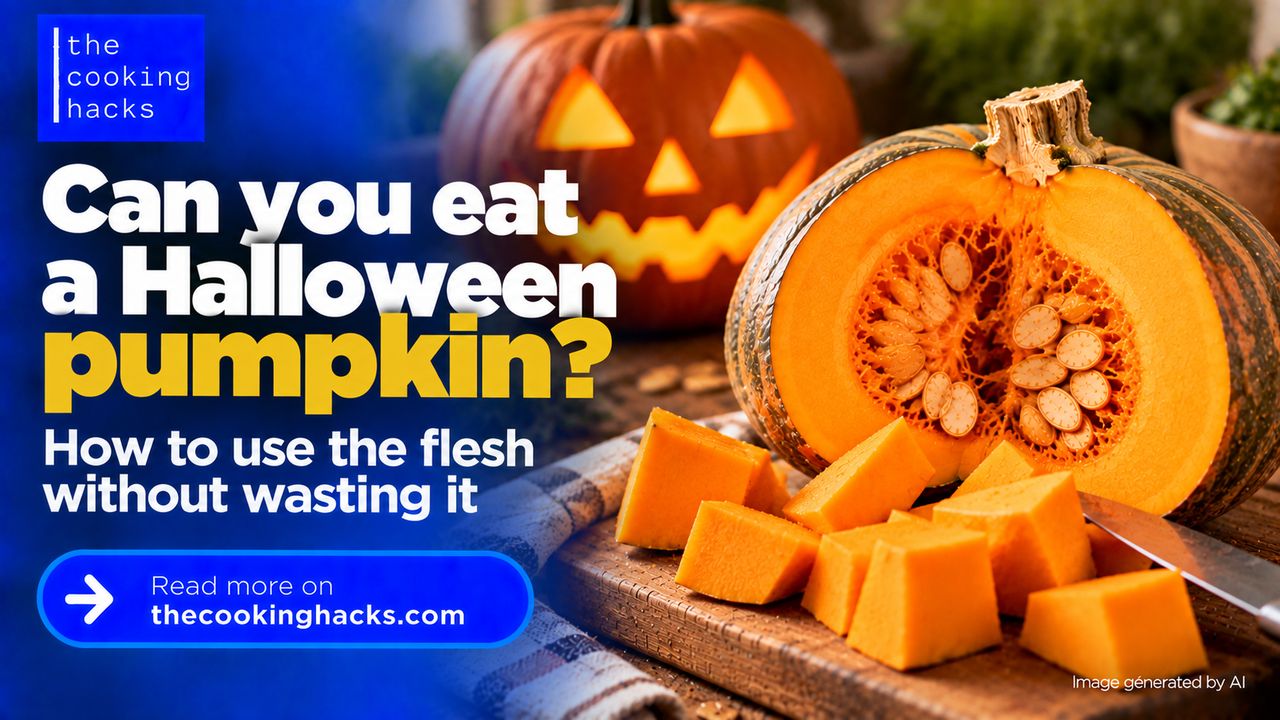
You can eat the flesh of a Halloween pumpkin if the pumpkin is an edible variety intended for food. What you should not do is assume that every pumpkin, squash or gourd sold as an autumn decoration is suitable for cooking. If you want one pumpkin to become both food and a Jack-o’-lantern, make that decision when you buy it.
There is another important distinction: saving fresh flesh while carving an edible pumpkin is very different from eating the Jack-o’-lantern after it has spent several days on display. Once a pumpkin is cut, moist flesh is exposed to handling and the surrounding environment, and the pumpkin begins to deteriorate.
Are Halloween pumpkins edible?
Some are. Many pumpkins sold specifically for carving are edible, although their eating quality may not be particularly good. Decorative gourds and ornamental squash, however, should not automatically be treated as food.
This is more than a question of flavour. Some ornamental cucurbits can contain high levels of cucurbitacins, intensely bitter compounds associated with gastrointestinal poisoning. ANSES, the French food-safety agency, advises consumers not to eat ornamental gourds and to discard an unusually bitter squash rather than trying to make it safe by cooking.
For shoppers, the practical rule is straightforward: if you intend to cook it, choose a pumpkin that is clearly being sold for food use.
Is a carving pumpkin the same as an ornamental gourd?
No. A pumpkin can be suitable for carving and still be edible.
The large orange pumpkins commonly used for Jack-o’-lanterns in the United States are generally selected for features such as size, shape and ease of carving. That does not necessarily make them toxic or inedible, but it can make them less appealing in the kitchen.
University of Minnesota Extension explains that the big pumpkins typically carved for Halloween tend to have stringy, bland flesh, while smaller pie pumpkins are better suited to cooking.
So there are really two questions: Is it safe to eat? And is it a good pumpkin to cook with? They are not the same question.
When should you save the flesh?
If you are using an edible pumpkin, save the flesh while preparing it for carving, before it becomes a decoration.
First, wash the outside under clean running water. Pumpkins grow on the ground, so dirt and microorganisms can be present on the rind and transferred to the flesh when a knife cuts through it. University of Minnesota Extension recommends washing the pumpkin before cutting and washing hands after handling it.
Then work with clean hands, utensils and surfaces and keep the flesh you plan to eat separate from the carved shell.
What parts of a carving pumpkin can you use?
Inside a pumpkin you will find seeds, fibrous strands and firmer flesh.
If the pumpkin is edible, usable flesh removed while thinning or preparing the walls can be set aside for cooking. Seeds can be separated from the stringy pulp and used on their own.
Penn State Extension specifically recommends turning carving leftovers into roasted pumpkin seeds and notes that both the cream-coloured hull and the green kernel inside are edible.
What can you do with watery or stringy pumpkin flesh?
Do not expect every carving pumpkin to behave like a pie pumpkin.
A pumpkin selected mainly for carving may produce watery or fibrous flesh. That can make it less suitable for dishes where you want firm pieces or a naturally dense purée, but it does not necessarily make an otherwise edible pumpkin unusable.
Cooking and then mashing or blending the flesh can make it easier to use. If the resulting purée contains a lot of water, its consistency needs to be considered before adding it to baking recipes, fillings or other preparations where moisture matters.
Can you eat a Jack-o’-lantern after Halloween?
A better food-waste strategy is to save the edible parts when you carve it, not plan to eat the decoration later.
Carving removes the protection provided by an intact rind and exposes moist tissue. Over time the pumpkin loses water, softens and can develop mould and decay. University of Minnesota Extension notes that carved Jack-o’-lanterns can become mouldy and collapse especially quickly in warm weather.
Once you have set aside the fresh edible portion, treat the carved shell as a decoration rather than as food waiting to be eaten several days later.
What if the pumpkin or squash tastes extremely bitter?
Stop eating it.
Strong, unusual bitterness can indicate elevated levels of cucurbitacins. ANSES advises that a bitter squash should be discarded and should not be eaten even after cooking.
Cooking, seasoning or adding sugar should therefore never be used as a way to rescue an unexpectedly bitter squash.
How to waste less of your Halloween pumpkin
The easiest approach starts before Halloween night.
Choose an edible pumpkin that can also be carved, wash it before cutting, and set aside usable flesh while you work. Separate the seeds if you want to roast them, then use the carved shell for your Jack-o’-lantern.
This turns pumpkin waste reduction into a practical plan: use the edible parts while the pumpkin is being prepared, rather than trying to turn an old Halloween decoration back into food.
Frequently asked questions
Are all Halloween pumpkins edible?
No. Many carving pumpkins are edible, but ornamental squash and gourds should not automatically be treated as food. Choose produce clearly intended for eating if you plan to cook it.
Can I cook the flesh I remove while carving?
Yes, if it comes from an edible pumpkin and is handled hygienically while you prepare the pumpkin.
Do carving pumpkins taste like pie pumpkins?
Not necessarily. Large carving pumpkins can have stringier, blander flesh than smaller varieties selected specifically for cooking.
Can I eat my Jack-o’-lantern after Halloween?
It is better to save the edible flesh during carving and treat the displayed Jack-o’-lantern as a decoration afterward.
Can I eat a very bitter pumpkin after cooking it?
No. Unusually strong bitterness can indicate high cucurbitacin levels, and cooking should not be used to make a bitter squash safe.
If you don't want to miss the important news, subscribe to The Cooking Hacks Telegram channels:
- Food Recall UK, receive news about food recalls to have a safe pantry
- Offers this week UK, to find out what are the latest offers from supermarkets