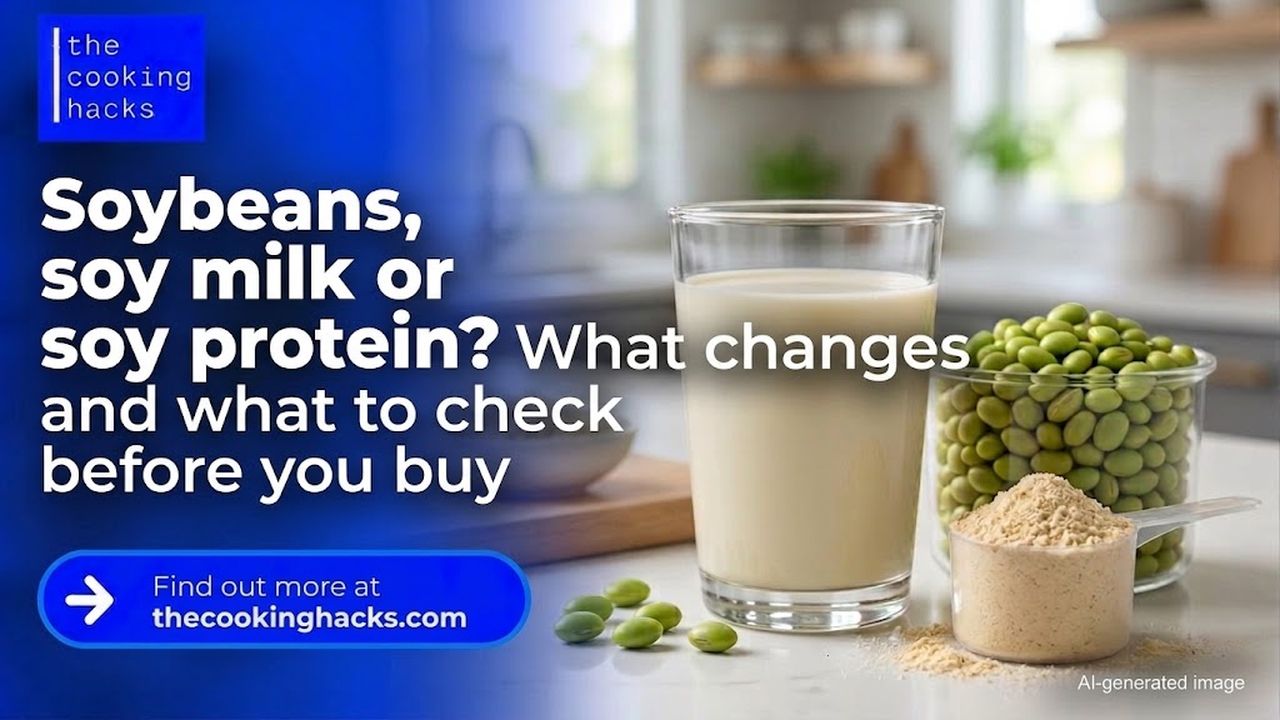
Walk through a supermarket and soy can appear in very different forms: whole beans, soy milk, meat alternatives and high-protein foods made with soy protein concentrates or isolates.
They all start with soybeans, but that does not mean they end up with the same nutritional profile.
A study published in Food Production, Processing and Nutrition provides a useful example. Researchers compared soybeans, soy protein concentrates and isolates, and soy milk, looking specifically at vitamin B1 and different forms of vitamin B6.
The study does not tell shoppers which soy product is “best”. What it does show is why seeing soy on the front of a pack or in an ingredient list is not enough to know what the finished food contains.
What changes when protein is extracted from soybeans?
Soy protein concentrates and isolates are designed to provide a concentrated source of protein. In the samples tested, concentrates contained 68–75% protein and isolates contained 91–96%.
But concentrating protein does not mean concentrating everything else found in the original soybean.
The researchers found that the concentrates and isolates they tested contained 84–94% less vitamin B1 and B6 than soybeans. This is a useful distinction when reading the ingredient list on a plant-based burger, protein food or other product.
If you see soy protein isolate or soy protein concentrate, the manufacturer is using an ingredient in which protein has been deliberately concentrated. It is not nutritionally the same thing as eating whole soybeans, and a high protein content does not tell you how much of every other nutrient originally found in the bean remains.
What about soy milk?
Soy milk showed a different pattern. In the unfortified products tested, levels of the vitamins studied were generally closer to those found in soybeans than they were in protein concentrates and isolates.
One UHT soy milk had lower amounts of some forms of vitamin B6. Because the researchers tested only a small number of drinks, however, this should not be turned into a rule that applies to every UHT soy milk on the market.
Then there is fortification. Manufacturers can add vitamins and minerals to plant-based drinks, which means two cartons of soy milk can look very similar while having quite different nutrient profiles.
This is particularly relevant when soy milk is being used as an alternative to dairy milk. In the UK, the 2025 SACN and COT assessment found considerable variation in the nutrient composition and fortification of plant-based drinks and recommended fortified, unsweetened options for adults and children aged five and over using them as alternatives to cow’s milk.
So rather than choosing on the word soy alone, check the nutrition label for protein, sugars and added vitamins and minerals.
Does this mean soy protein isolate is a worse choice?
No. The study does not support that conclusion.
A protein isolate is made for a particular purpose: concentrating protein. Finding less B1 and B6 than in whole soybeans tells us something about what happens during processing, but it does not provide an overall health rating for the ingredient or for foods containing it.
The reverse assumption does not work either. A product is not automatically nutritionally complete simply because it contains soybeans or because it is plant-based.
The useful question is therefore not “How processed is this?” in isolation, but “What is this product providing, and what else is in it?” A whole soy food, a fortified soy drink and a food made with soy protein isolate can serve quite different purposes.
What should you actually check on the label?
The practical lesson from the research is straightforward: foods made from the same raw ingredient can end up nutritionally different.
With soy milk, check whether it is fortified and which nutrients have been added, alongside its protein and sugar content. With burgers, protein foods and other products containing soy concentrates or isolates, look at the complete nutrition information and ingredient list rather than assuming that “soy protein” has the same nutritional profile as the whole bean.
There is no need for shoppers to search labels for the individual forms of vitamin B6 measured by the researchers. That distinction matters scientifically because different forms of the vitamin are not necessarily used by the body in exactly the same way. For everyday shopping, however, the important point is simply that processing can change particular micronutrients.
Why the results cannot be applied to every soy product
The study analysed specific samples rather than every product on the market: six commercial soybean varieties, seven soy protein concentrates, seven isolates and a limited selection of soy milks. The soy milk samples were purchased in Singapore.
That means the percentages found in the study cannot tell us how much B1 or B6 is in a particular carton or burger sold today in the UK or US.
There is another important limitation: researchers investigated B1 and B6, not the complete nutritional value of each food. The findings do not show that a more processed soy product is inherently unhealthy, nor that whole soybeans will always be the better choice for every nutritional purpose.
The most useful takeaway at the supermarket is narrower: whole soybeans, soy milk and soy protein isolates may share an origin, but they are different foods or ingredients. Read the finished product for what it actually contains.
Is soy protein isolate the same as whole soybeans?
No. Soy protein isolate is produced by concentrating the protein fraction of soybeans. In the study, isolates were very high in protein but contained substantially less of the B1 and B6 measured in whole soybeans.
Does soy milk retain the vitamins found in soybeans?
The unfortified soy milks tested generally had B1 and B6 levels closer to those of soybeans than protein concentrates and isolates did. The result should not be assumed to apply to every soy milk.
What does fortified soy milk mean?
It means vitamins or minerals have been added during manufacturing. The nutrients added vary between products and markets, so the individual label matters.
Should I avoid foods made with soy protein isolate?
This research provides no basis for doing so. It measured specific vitamins and was not designed to determine whether foods made with soy protein isolates are healthy or unhealthy overall.
If you don't want to miss the important news, subscribe to The Cooking Hacks Telegram channels:
- Food Recall UK, receive news about food recalls to have a safe pantry
- Offers this week UK, to find out what are the latest offers from supermarkets