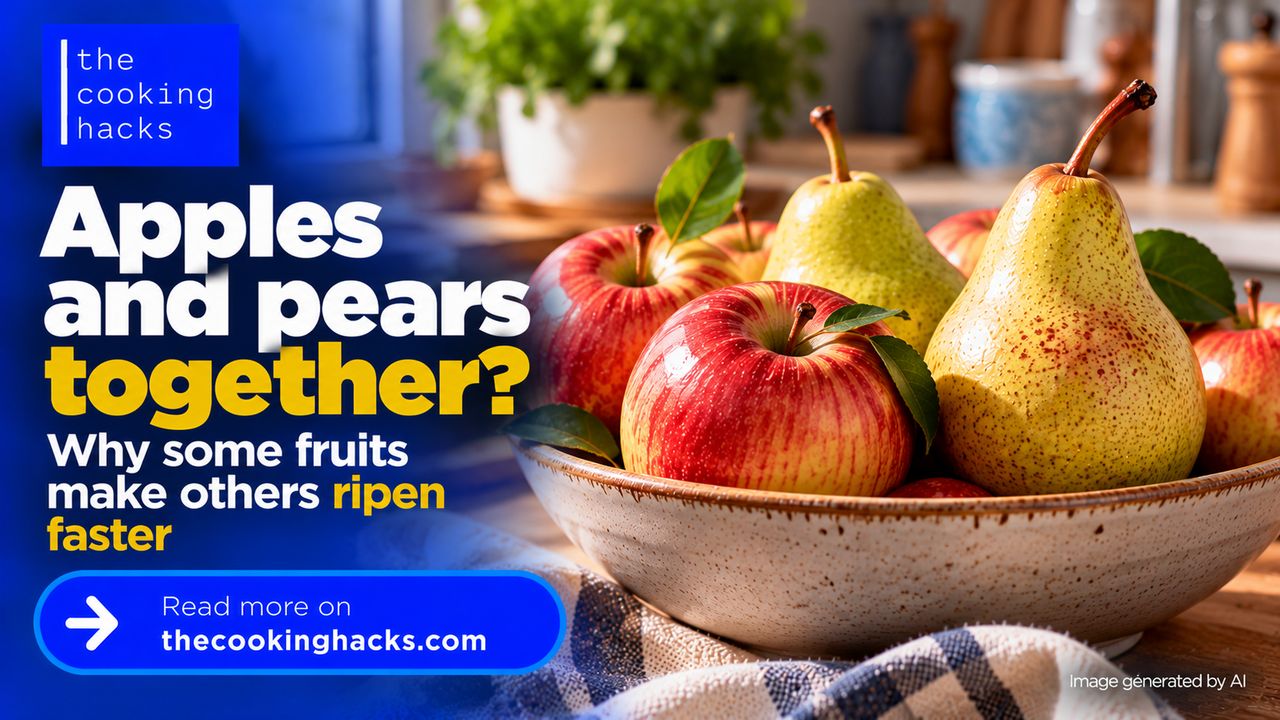
Putting apples, pears, bananas and avocados in one fruit bowl is convenient. But a few days after grocery shopping, you might notice that some fruit has softened much faster than expected. The difference is not always down to how ripe it was when you bought it.
Many fruits naturally release ethylene, a gas that helps regulate ripening. Some fruits also respond to ethylene released by their neighbours, which can make them ripen faster.
That does not mean apples and pears must always be stored separately. The better question is whether you want your fruit to ripen soon or stay in good condition for longer.
What is ethylene and how does it ripen fruit?
Ethylene is a naturally occurring plant hormone released as a gas. In certain fruits, it acts as a biological signal that helps regulate ripening, including changes in firmness, colour and aroma.
As ripening progresses, some fruits produce more ethylene. Exposure to the gas around them can then contribute to further ripening.
The University of Maryland Extension explains the science of ethylene and fruit ripening, including why some fruits continue ripening after harvest while others do not.
For everyday food storage, the important point is that not all fruit responds to ethylene in the same way.
Which fruits continue ripening after you buy them?
Scientists describe fruits such as apples, European pears, bananas, peaches, kiwifruit and avocados as climacteric. These fruits can continue ripening after harvest, provided they were picked at a suitable stage of development.
Strawberries, grapes and cherries are examples of non-climacteric fruits. They do not undergo the same ripening process after picking. They may soften or lose quality during storage, but leaving them beside a banana will not necessarily make them sweeter.
| Fruit | Practical storage advice |
|---|---|
| Apples | Refrigerate for longer storage |
| European pears | Leave at room temperature if they still need to ripen |
| Bananas | Keep at room temperature while ripening |
| Kiwifruit | Allow firm fruit to ripen before refrigerating |
| Avocados | Ripen at room temperature, then refrigerate when ready |
| Strawberries and grapes | Refrigerate rather than trying to ripen them on the counter |
There is an important exception within the pear family. Asian pears are usually enjoyed crisp and are not meant to soften like many European pears.
Can apples and pears be stored together?
Yes. If you plan to eat them soon, keeping apples and pears in the same fruit bowl is generally fine.
The situation changes when you want to extend their storage life. Apples release ethylene, and pears can respond to it. Keeping ripe apples next to pears that are already ready to eat may therefore be less useful than storing them separately.
On the other hand, an apple can be helpful when a pear is still too firm.
The effect is not automatic or identical for every fruit. Variety, initial ripeness, room temperature and time spent together all influence what happens.
If your main concern is choosing the right storage location, our guide to keeping fruit in the fridge or on the counter explains why the answer changes from one fruit to another.
How to ripen pears faster using a paper bag
If you have bought European pears that are still firm, you can let them ripen at room temperature. To encourage the process, place them in a paper bag, optionally with a ripe apple or banana.
The fruit releases ethylene, and some of the gas accumulates inside the bag. This can encourage ripening without the need for special equipment.
The Iowa State University Extension guide to harvesting, ripening and storing pears describes the use of paper bags for European pears and explains how their ripening differs from Asian pears.
At home, follow these steps:
- Choose healthy fruit without mould or obvious damage.
- Place the firm pears in a paper bag.
- Add a ripe apple or banana if you want to encourage ripening.
- Keep the bag at room temperature, away from direct sunlight and strong heat.
- Check the fruit daily and remove it when it reaches the firmness you prefer.
Avoid assuming that every pear will be ready after a fixed number of hours. Ripening depends on the fruit and the conditions in your kitchen.
A similar approach may help firm avocados and kiwifruit. It will not, however, make every type of fruit ripen after harvest.
When should you keep fruit apart?
Separating fruit is most useful when your aim is to slow further ripening.
If you buy a large bag of apples and only need a few for the next day or two, refrigerating the rest is usually more sensible than leaving them all in a warm kitchen.
Likewise, if your pears are already ripe, keeping them away from a bowl full of ripe bananas and apples may help avoid unnecessary exposure to ethylene.
It is also worth checking fruit for bruising and visible deterioration. Damaged fruit should not be left unnoticed among healthy produce, regardless of how much ethylene it produces.
You do not need a separate container for every kind of fruit. Sorting by ripeness and intended use is often enough.
Does fruit ripen faster in a warm kitchen?
Temperature makes a difference. In general, warmer conditions encourage many biological processes involved in ripening and deterioration, while refrigeration slows them.
That is why firm pears, peaches, kiwifruit and avocados may benefit from some time at room temperature, followed by refrigeration once they are ripe.
Strawberries and grapes are different. Leaving them on the counter for several days is not an effective way to improve their ripeness, and refrigeration is usually the better choice for maintaining quality.
For avocados in particular, ripeness should guide storage. Our article on how to store potatoes, onions and avocados explains why a firm avocado and a ripe one may need different treatment.
Does ethylene make fruit rot?
Not directly. Ethylene is a plant hormone, not a microorganism or a type of mould.
It can accelerate ripening and some of the changes associated with ageing plant tissues. As fruit becomes softer and more delicate, it may be more vulnerable to damage and deterioration.
Actual spoilage also depends on factors such as microorganisms, physical damage, moisture and temperature.
A ripe pear that has become tender is therefore not the same as one showing mould, an unusual smell or clear signs of decay. Do not use the paper-bag method on fruit that is already deteriorating.
A simple way to organise fruit after grocery shopping
Instead of putting everything in one bowl, think about when you want to eat each item.
Keep fruit that is already ripe at the front of your meal plan. Let firm pears, kiwifruit or avocados ripen at room temperature when needed. Refrigerate produce that benefits from cold storage, including apples you want to keep longer and delicate berries.
Check ripening fruit regularly. Moving it to the refrigerator at the right time can give you more flexibility without allowing it to become overripe.
The aim is not to stop all ripening. It is to use the process when it helps and slow it when it does not.
Frequently asked questions
Do apples make pears ripen faster?
They can. Apples release ethylene, which may encourage the ripening of nearby European pears. The result depends on the pears’ initial ripeness and storage conditions.
Can a banana help ripen an avocado?
Yes, keeping a firm avocado near a ripe banana may encourage ripening. A paper bag can help retain some ethylene, but the avocado should be checked daily.
Will strawberries get sweeter if stored next to apples?
Not in the same way that pears or bananas ripen. Strawberries are non-climacteric fruits and do not undergo comparable ripening after harvest.
Should apples be stored in the refrigerator?
Generally, yes, if you want to keep them for longer. Apples intended for quick consumption can remain in a fruit bowl, provided conditions are suitable.
If you don't want to miss the important news, subscribe to The Cooking Hacks Telegram channels:
- Food Recall UK, receive news about food recalls to have a safe pantry
- Offers this week UK, to find out what are the latest offers from supermarkets