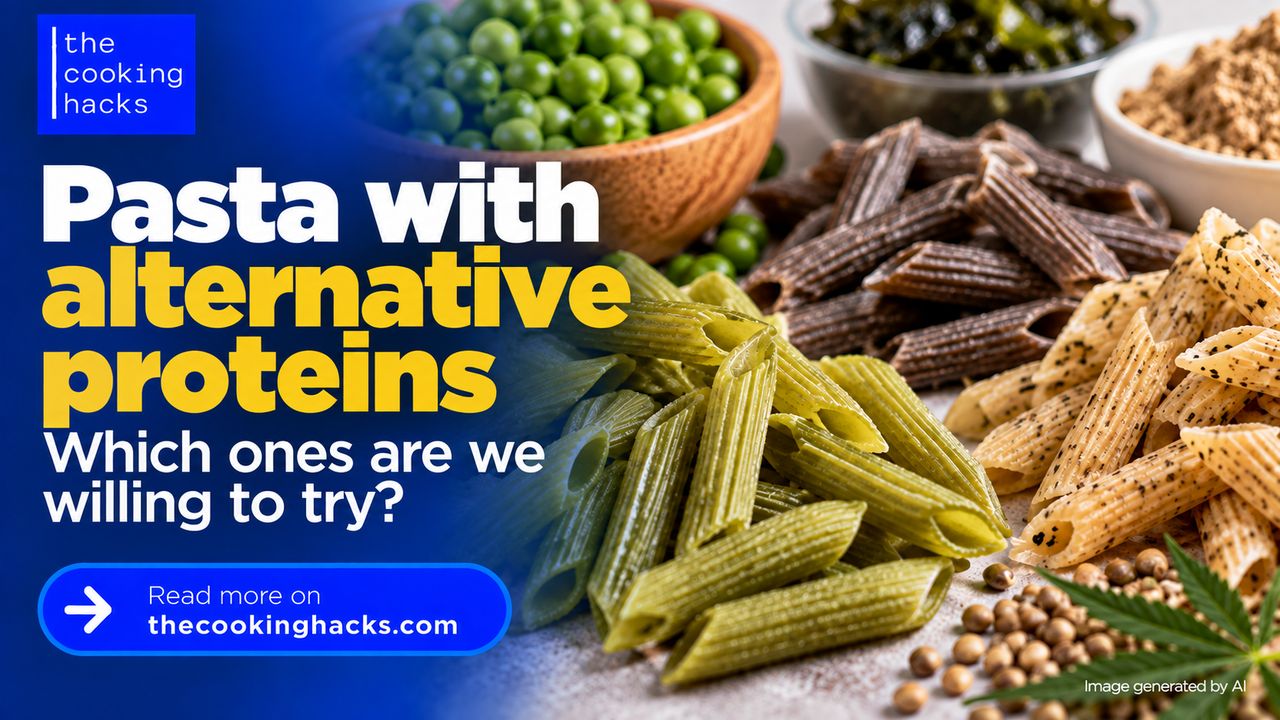
Pasta made with pea protein may not sound particularly unusual. Hemp or seaweed can feel less familiar, while the idea of pasta containing insects may create a much stronger reaction. But when we encounter an unfamiliar food, what actually makes us willing to try it? Is it the nutritional information, environmental messaging, or simply how comfortable we are with eating something new?
A new study published in the International Journal of Gastronomy and Food Science investigated this question using an online questionnaire completed by 470 participants in Italy. Researchers considered pasta formulated with pea, hemp, seaweed and insect ingredients and examined both willingness to try and willingness to buy. The location of the study matters: its results describe responses from an Italian sample and should not be treated as measurements of consumer preferences in the UK or US.
Pea protein pasta had the highest acceptance
Of the four options examined, pea protein pasta produced the highest willingness to try and willingness to buy, while insect pasta had the lowest acceptance.
That does not mean everyone would make the same choice, nor does it establish a universal ranking of alternative proteins. The study examined particular pasta concepts among a particular group of participants.
It does, however, highlight something relevant when shopping for unfamiliar foods: familiarity may matter. Peas are already a common food, whereas some other protein sources can feel much further removed from what a person normally eats.
The term “alternative protein” should not be read as a nutritional verdict either. A pasta containing an alternative protein source is not automatically more nutritious than conventional pasta. To compare actual products, shoppers still need to look at the ingredient list and nutrition information on the individual packages.
What is food neophobia?
One of the most important concepts in the research is food neophobia, the reluctance to eat foods that are new or unfamiliar. It is not an allergy or an intolerance, and it does not simply mean disliking something after tasting it. It describes resistance to unfamiliar foods before or around the decision to try them.
Participants with lower food-neophobia scores were more willing to try and buy pasta containing alternative protein sources. Those with higher scores showed less willingness to adopt the unfamiliar products and appeared less responsive to the information presented to them.
This helps explain why two shoppers can look at the same product and react very differently. Before someone starts comparing nutrients or environmental claims, there may be a more immediate question: “Does this feel too unfamiliar for me to eat?”
Can nutrition information change people’s minds?
Sometimes, but the effect found in this study was specific. Nutritional information significantly increased willingness to buy the pea pasta. That does not show that nutrition messaging will make people accept every unfamiliar food.
In fact, among the variables examined, lower food neophobia was more consistently associated with willingness to try and buy the alternative-protein pastas than participants’ interest in health-related food attributes or their focus on environmental sustainability.
For shoppers, there is a useful distinction here. A protein claim or environmental message can provide information, but it cannot tell us on its own whether we will like the product, whether its overall nutritional profile suits our needs, or whether we will want to buy it again.
This study did not measure what people actually bought
There is another important limitation. This was an online questionnaire, not a study that followed 470 people through a supermarket and recorded what they put in their baskets. Among the outcomes measured were willingness to try and willingness to buy.
Stating that you would try a product is not necessarily the same as buying it when price, brand, availability, taste expectations and competing products enter the decision.
The study also cannot tell us that shoppers in the UK or US would respond to pea, hemp, seaweed and insect pasta in the same way as the Italian participants.
Its most practical message is therefore broader than deciding which pasta is “best”: our response to a new food is shaped not only by what the package tells us, but also by how familiar — or unfamiliar — the food already feels.
What is food neophobia?
Food neophobia is reluctance to try new or unfamiliar foods. In this study, lower food-neophobia scores were associated with greater willingness to try and buy the alternative-protein pastas.
Which alternative protein pasta had the highest acceptance?
Among the four options examined, pea protein pasta had the highest willingness to try and buy, while insect pasta had the lowest acceptance.
Is alternative protein pasta healthier than regular pasta?
This study does not establish that. The nutritional profile needs to be assessed from the ingredients and nutrition information of the actual products being compared.
Does the study show what UK or US shoppers prefer?
No. The questionnaire involved 470 participants in Italy, so its results should not be presented as UK or US consumer preferences.
If you don't want to miss the important news, subscribe to The Cooking Hacks Telegram channels:
- Food Recall UK, receive news about food recalls to have a safe pantry
- Offers this week UK, to find out what are the latest offers from supermarkets