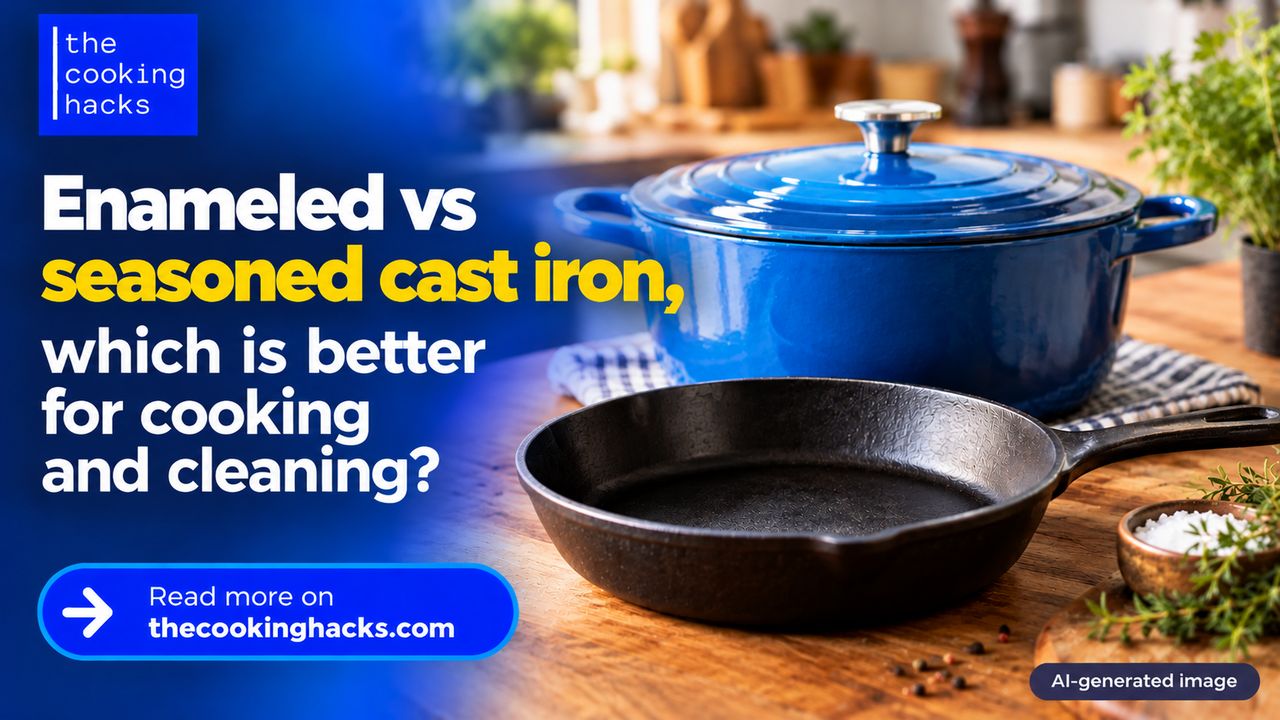
Choosing between enameled and seasoned cast iron is not just about appearance or price. Both types of cookware retain heat well and can be used for a wide range of recipes, but their cooking surfaces require different care. Seasoned cast iron develops a protective layer of polymerized oil, while enameled cast iron has a glass-like coating bonded to the metal. Understanding that difference can help you choose the right pan for searing meat, slow-cooking stews or baking bread.
What is the difference between enameled and seasoned cast iron?
Both types of cookware are made primarily from cast iron, a material that can store a substantial amount of heat because of its mass. This makes cast iron useful for slow cooking and for recipes where maintaining a relatively stable cooking temperature matters.
Seasoned cast iron, sometimes called bare or uncoated cast iron, has a protective layer created by heating a thin coating of oil. During this process, the oil polymerizes and bonds to the surface. The resulting seasoning helps protect the metal against rust and can make food release more easily.
Enameled cast iron has a vitrified coating that separates food from the underlying metal. The enameled cooking surface does not need seasoning and is generally better suited to prolonged contact with acidic ingredients such as tomatoes, wine or vinegar.
In its cast iron cookware guide, manufacturer Lodge recommends seasoned skillets for tasks including searing meat and cooking over a grill, while highlighting enameled Dutch ovens for soups, braises and slow-cooked dishes. The exact cooking options still depend on the design and instructions for each product.
Which cast iron is better for steaks, stews and bread?
A seasoned cast iron skillet is a practical choice for searing steaks, burgers and vegetables. Once properly preheated, its mass helps limit the temperature drop when food is added. However, a good crust also depends on the moisture on the food’s surface, the cooking temperature and how much food is placed in the pan.
For beef stew, chilli, pot roast or other dishes containing tomato sauce or wine, an enameled Dutch oven can be more convenient. The coating allows these ingredients to simmer without the same concerns about prolonged contact with a seasoned iron surface.
Both types of cast iron can also work for baking bread, provided the cookware is rated for the required oven temperature. A covered Dutch oven traps some of the steam released by the dough during the early stages of baking, helping the loaf expand before its crust sets.
For home bakers, the important consideration is not simply whether a pot is made from cast iron. The lid, knob and handles must also be suitable for the recipe’s temperature, particularly when baking bread at high heat.
Can enameled cast iron be used over high heat?
Cast iron itself can tolerate high temperatures, but the enamel coating and attached components may have different limits. A temperature rating for one Dutch oven should never be assumed to apply to another model.
On the stovetop, gradually heating enameled cookware is generally preferable to placing an empty pot over maximum heat. Some manufacturers warn that overheating an empty enameled pan can damage its coating.
Sudden temperature changes are another concern. Pouring cold water into a very hot pot or moving it directly from the stove to a cold sink can expose the coating to thermal shock.
When baking bread, always check the manufacturer’s instructions for preheating and oven use. Some enameled cookware can be preheated empty in an oven under specified conditions, but this should not be treated as a universal rule.
How to clean and maintain seasoned cast iron
Seasoned cast iron should be cleaned after cooking and dried thoroughly to help prevent rust. Food residue can usually be removed with warm water, a suitable brush or a non-damaging scraper.
Despite a common kitchen myth, a small amount of mild dish soap does not automatically strip away a well-developed layer of seasoning. However, prolonged soaking and leaving the pan wet can encourage rust to form.
After washing, dry the cookware immediately. Briefly warming the pan over low or moderate heat can help remove remaining moisture. Depending on the manufacturer’s instructions, a very thin layer of cooking oil can then be applied before storage.
If the seasoning deteriorates or small rust patches appear, seasoned cast iron can generally be restored through appropriate cleaning and reseasoning. This is one of the practical advantages of an uncoated cooking surface.
How to clean enameled cast iron without damaging it
Enameled cast iron does not require seasoning on its coated surfaces. However, the enamel needs protection from hard impacts, abrasive cleaning tools and sudden changes in temperature.
According to Lodge’s enameled cast iron cleaning instructions, cookware should be allowed to cool before washing with warm, soapy water and a gentle sponge or cloth. It should then be dried completely before storage.
Light staining inside an enameled Dutch oven is not necessarily a sign of damage. Some discoloration is expected with normal use. However, chips, cracks or flaking enamel on a food-contact surface are different concerns. Stop using the cookware and consult the manufacturer if the coating is damaged.
Some enameled cast iron products are described as dishwasher-safe, but manufacturers may still recommend hand washing to preserve their finish. The care instructions for the specific item should take priority.
Does cast iron work on induction cooktops?
Cast iron is generally compatible with induction cooking because it contains ferromagnetic iron. This applies to many seasoned and enameled cast iron pans, although individual product specifications should still be checked.
Its weight also matters. On glass or ceramic cooktops, heavy cookware should be lifted rather than dragged across the surface to reduce the risk of scratches.
Another consideration is the size of the pan’s base. A Dutch oven that is much wider than the heating zone may not perform as expected, while rapid heating at maximum power can be unsuitable for some enameled products.
Which type of cast iron should you buy?
For frequent steak cooking, pan-seared vegetables or compatible outdoor grilling, a seasoned cast iron skillet may be the more practical option. Its surface can be maintained and renewed, although it requires careful drying and occasional attention to the seasoning.
For stews, braised meats, soups and dishes containing acidic ingredients, an enameled Dutch oven may be easier to manage. It does not need surface seasoning and can be particularly convenient for long, moist cooking methods.
When shopping, consider the cookware’s weight, capacity, handle design, compatibility with your hob or cooktop, and maximum oven temperature. A large Dutch oven can become particularly heavy when filled with food.
In the UK, interest in cast iron cookware has also been encouraged by seasonal supermarket collections. For example, Aldi UK announced the return of its cast iron cookware range from 5 November 2026, including Dutch ovens and skillets. The promotion applies to the British market and does not establish equivalent availability or prices in the United States.
Regardless of brand or price, the best choice is the cookware that suits the meals you prepare most often and the maintenance you are comfortable doing. Neither enameled nor seasoned cast iron is automatically better for every cooking task.
If you don't want to miss the important news, subscribe to The Cooking Hacks Telegram channels:
- Food Recall UK, receive news about food recalls to have a safe pantry
- Offers this week UK, to find out what are the latest offers from supermarkets