When preparing broccoli, most people cut off the florets and throw away the thick stalk. But broccoli stems and leaves are edible too. They simply need a different approach: the outer stem can be tough, while the leaves cook more like cabbage or collard greens.
Using these parts is an easy way to get more from the vegetables you buy. The key is knowing what to trim, what to peel and how to cook each part so it tastes good.
Which parts of broccoli can you eat?
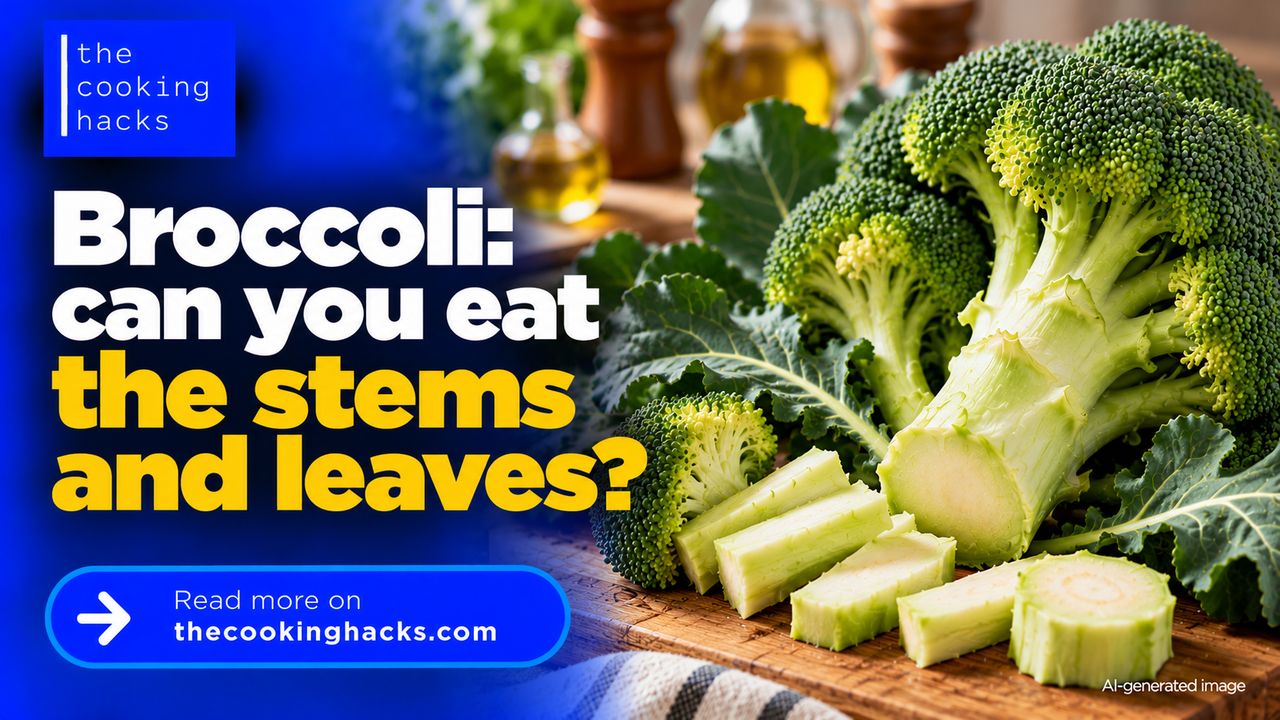
A broccoli plant has florets, smaller branching stems, a thick central stalk and leaves. All of these parts can be eaten when fresh and in good condition.
The florets are clusters of unopened flower buds. The stalk supports them and remains edible even when its outer layer becomes fibrous. The leaves can be cooked much like other leafy brassicas. The University of Minnesota Extension specifically identifies broccoli leaves as edible and suggests preparing them like kale or collard greens.
That does not mean every piece should be kept. Discard parts showing rot, mould or obvious deterioration, and avoid assuming that all leaves from all vegetable plants are safe to eat.
How to peel and cut broccoli stems
The main challenge with a broccoli stem is its tough outer layer, especially on a large, mature stalk. Cut off the dry bottom end, then use a vegetable peeler or knife to remove the fibrous skin where necessary.
The tender centre can be sliced into thin rounds, cut into matchsticks or diced for soups and stir-fries. Smaller pieces generally cook more evenly than a thick section left whole.
Young, tender stems may not need peeling. If the outside is easy to cut and chew, washing and slicing may be enough.
How to cook broccoli stems so they are tender
Broccoli stems work well in soups, stir-fries, pasta dishes and vegetable sides. Thin slices can be sautéed in a little oil; diced stems can simmer in soup until tender. For a smooth vegetable soup, cook the stems thoroughly before blending them with the other ingredients.
If cooking stems and florets together, add the thicker stem pieces first and the florets later. Otherwise, the florets may become too soft before the stalk has finished cooking.
Steaming, boiling and microwaving can all be useful, depending on the dish. Our comparison of boiled, steamed and microwaved broccoli explains how cooking conditions affect texture and some of the vegetable’s compounds.
Can you cook broccoli leaves?
Yes. Broccoli leaves are edible and can be used in many of the same ways as other cabbage-family greens. Smaller leaves are usually more tender. Larger leaves may have a thick central rib, which can be removed or chopped separately.
Wash the leaves, cut them into strips and sauté them with garlic, add them to soup or cook them alongside other vegetables. If the ribs are thick, start cooking those before adding the softer leafy parts.
Broccoli leaves may taste stronger than the florets. Mixing them with potatoes, beans or other vegetables can help balance their flavour.
How to wash broccoli stems, leaves and florets
Rinse all the parts you intend to eat under running water, paying attention to folds in the leaves and spaces between the florets. Use clean utensils and a clean chopping board.
Do not use soap, bleach or household disinfectants on vegetables. FoodSafety.gov recommends rinsing produce under running water without these products.
Washing cannot make spoiled vegetables safe again. If broccoli shows signs of mould or rot, do not assume cooking will solve the problem.
Using more broccoli without wasting food
Eating the stem and leaves is a straightforward way to reduce kitchen waste. It also helps make better use of broccoli sold with a long stalk or several attached leaves.
The idea fits into a wider discussion about edible vegetable parts that are routinely discarded. A previous The Cooking Hacks article on vegetable stems and leaves examined research into using recognised edible parts in new foods. That research does not mean every plant trimming is safe to eat.
For everyday cooking, the useful rule is simple: keep the healthy edible parts, prepare them according to their texture and choose a cooking method that makes them enjoyable to eat.
FAQ
Do you have to peel broccoli stems before eating them?
Not always. Young, tender stems may only need washing and slicing. If the outer skin is thick and fibrous, peel it away and use the softer centre.
Can you eat large broccoli leaves?
Yes, provided they are fresh and in good condition. Large leaves may have a tough central rib that can be removed or finely chopped and cooked separately.
Do broccoli stems take longer to cook than florets?
Thick pieces of stem generally take longer to soften. When cooking both together, start with the stems and add the florets later.
Can you eat broccoli stems raw?
Yes. The tender centre of a fresh broccoli stem can be eaten raw after thorough washing. Peel away any tough outer skin and slice it thinly for salads or vegetable sticks.
What can you make with broccoli stems and leaves?
Peeled stems work well in soups, stir-fries, pasta sauces and vegetable sides. Broccoli leaves can be sautéed, added to soup or cooked with other leafy greens.
If you don't want to miss the important news, subscribe to The Cooking Hacks Telegram channels:
- Food Recall UK, receive news about food recalls to have a safe pantry
- Offers this week UK, to find out what are the latest offers from supermarkets