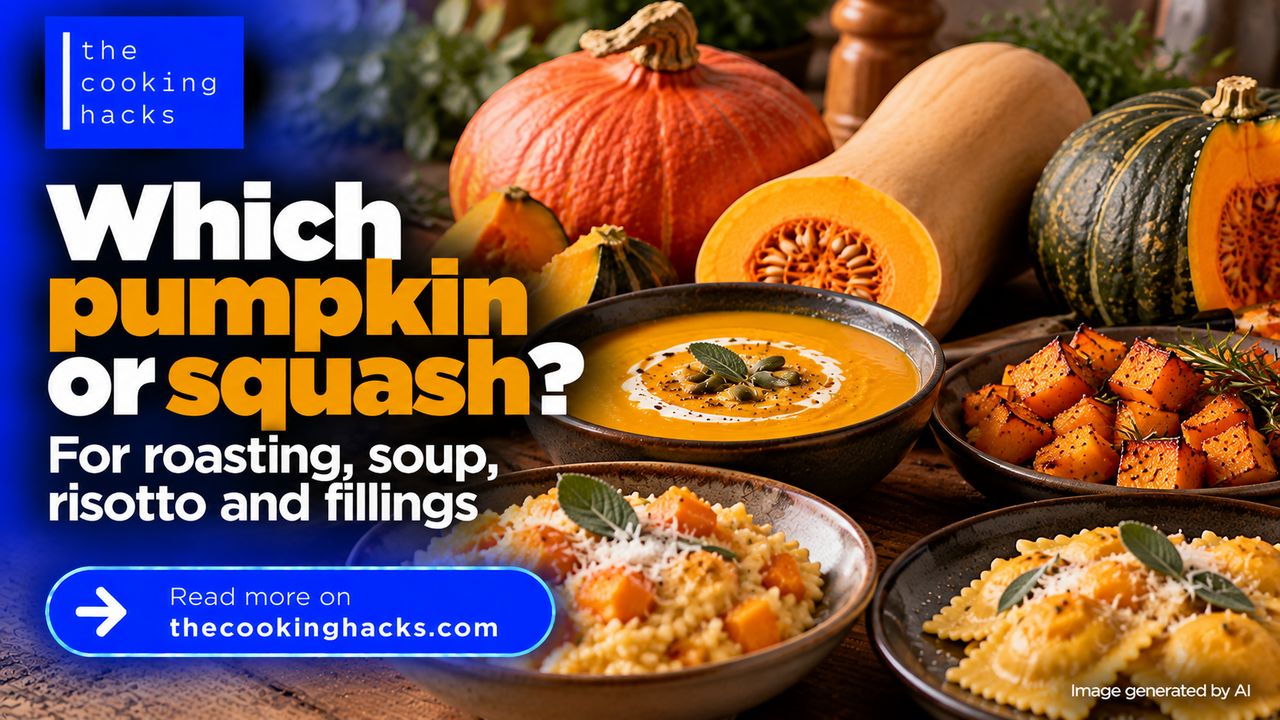
Not every pumpkin or winter squash cooks in the same way. Some varieties have firm, dense flesh that works well for roasting, while others become soft and smooth enough for soup. If you’re wondering which pumpkin or squash is best for roasting, soup, risotto or savory fillings, the most useful thing to consider is the texture you want after cooking. Butternut, kabocha, Red Kuri and sugar pumpkins can all work well, but they are not interchangeable in every recipe.
Which pumpkin or squash should you choose for each dish?
For everyday cooking, start with the recipe rather than the appearance of the squash. Individual varieties and ripeness can affect the result, but these are useful shopping guidelines.
- For roasting: kabocha, Red Kuri and butternut are good choices for wedges or cubes. They offer different flavors and textures but all work well in the oven.
- For soup: butternut is a reliable choice for a smooth, mild soup. Kabocha produces a richer, thicker purée.
- For risotto: kabocha or Red Kuri provide a more pronounced flavor, while butternut works well for a milder dish.
- For savory fillings: kabocha and other dense-fleshed cooking squash are useful when the filling needs to hold together without becoming watery.
In US supermarkets, you may also see sugar pumpkin or pie pumpkin, usually smaller cooking pumpkins with denser flesh than large carving pumpkins. In the UK, butternut is widely familiar, while Red Kuri may be sold as onion squash or Uchiki Kuri. Availability varies by retailer and season.
Butternut, kabocha, Red Kuri and sugar pumpkin: what’s the difference?
Butternut squash has a pale tan skin, orange flesh and a mild, slightly sweet flavor. It is versatile and works in roasted side dishes, soups, risotto and baked fillings.
Kabocha squash, sometimes sold as Japanese pumpkin, often has green skin and dense orange flesh. Its relatively dry, starchy texture makes it particularly useful for roasting, mashing and fillings that should not contain too much moisture.
Red Kuri squash is usually small, with orange-red skin and a rounded, slightly pointed shape. It has a distinctive, nutty flavor and can be roasted or cooked until soft for soups and risotto.
Sugar pumpkins are grown for cooking rather than primarily for carving. Their flesh is generally more suitable for purées and savory dishes than that of large decorative carving pumpkins. However, the name can cover different cultivars, so results may vary.
The Harvard T.H. Chan School of Public Health guide to winter squash explains the differences between common cooking varieties, including butternut, kabocha and sugar pumpkins.
What is the best squash for roasting?
Kabocha and Red Kuri are excellent options when you want roasted pieces with a rich flavor. Butternut is also a dependable choice for cubes, wedges and sheet-pan meals. If the goal is to keep the pieces recognizable rather than turn them into a mash, avoid overcooking.
Spread the pieces in a single layer on a baking tray or sheet pan. Crowding them traps steam and makes browning more difficult. The exact cooking time depends on the variety and size of the pieces, so check that the flesh is tender with a fork and that the edges have started to brown.
Which squash makes the best creamy soup?
Butternut squash is a practical starting point for a smooth, mild soup. Kabocha makes a thicker purée with a fuller flavor, while Red Kuri is useful when you want a more distinctive, nutty taste.
Whichever variety you choose, add stock gradually. A squash with dense flesh may need more liquid, while one that releases more moisture can become watery if you add too much at the beginning. You can always thin a soup after blending, but reducing excess liquid takes additional cooking.
Which pumpkin or squash works best in risotto?
For a flavorful risotto, kabocha or Red Kuri can work especially well. Butternut is a good alternative if you prefer a milder squash flavor or want a variety that is easier to find.
Try cooking some of the squash until it is soft enough to mash, while keeping the rest in small cubes. The mashed portion blends into the rice and contributes to a creamy texture; the cubes add contrast. Add stock gradually, taking into account any moisture released by the squash.
What squash is best for savory fillings?
For ravioli, stuffed pasta, hand pies or savory tarts, dense flesh is particularly useful. Kabocha is a strong choice because it tends to produce a thick mash. Roasted butternut can also work, especially if you allow excess moisture to evaporate before mixing the filling.
Roasting generally adds less water than boiling. After cooking, mash the flesh and check the texture before adding cheese, breadcrumbs or other filling ingredients. If the mixture is too wet, reducing its moisture is often better than adding large amounts of dry ingredients that could change the flavor.
The University of Maine Cooperative Extension guide to cooking winter squash also explains how different squash skins and cooking methods affect preparation.
How do you choose a good pumpkin or squash at the store?
Look for a squash that feels heavy for its size, has a firm rind and shows no soft, moldy or deeply damaged areas. Color and surface texture naturally vary between varieties, so an uneven-looking skin is not necessarily a problem.
If you are buying pre-cut squash, check that the flesh looks fresh and that it is being kept refrigerated. When the package simply says “pumpkin” or “winter squash,” the specific variety may be worth checking if the recipe depends on a firm or dry texture.
Large Halloween carving pumpkins are not automatically the best choice for cooking. They may be edible when sold as food, but their flesh can be less flavorful or more fibrous than that of varieties selected for the kitchen. The Cooking Hacks has also covered how long a carved Halloween pumpkin lasts. For roasting, soup, risotto or fillings, buying a cooking variety is usually the more reliable approach.
If you don't want to miss the important news, subscribe to The Cooking Hacks Telegram channels:
- Food Recall UK, receive news about food recalls to have a safe pantry
- Offers this week UK, to find out what are the latest offers from supermarkets