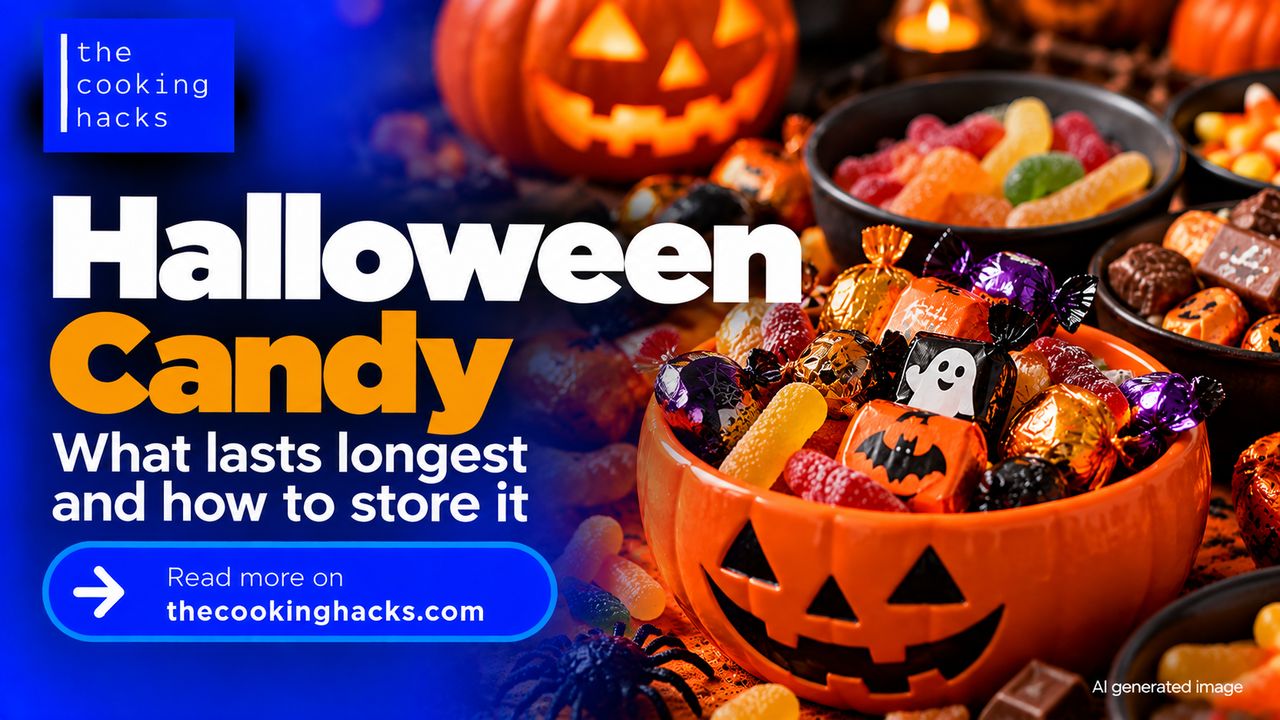
Hard candy, gummies, marshmallows and filled chocolates have different storage needs. How to sort your Halloween haul. Start by checking wrappers, ingredients and package directions.
Which Halloween candy lasts longest?
Dry, individually wrapped hard candy is generally more shelf-stable than soft confectionery or sweets containing perishable fillings. Available moisture, ingredients and packaging all matter. The printed best-before or best-by date and the manufacturer’s instructions are more useful than a universal number of months.
Hard candy and gummies
Hard candy can absorb moisture and become sticky; gummies may dry out and turn firm. Keep intact wrappers in a cool, dry cupboard away from sunlight. Seal opened sharing bags and avoid mixing sweets with different textures in one uncovered container.
Marshmallows and soft treats
Marshmallows can dry out or become tacky in humid conditions. Keep the package sealed. Fresh cream-filled or handmade treats are different from factory-wrapped sweets: check their ingredients and refrigeration instructions, and do not assume they can sit in a candy bowl for weeks.
Chocolate bars and filled chocolates
Plain chocolate stores best in stable, cool, dry conditions. White or grey patches can be fat bloom or sugar bloom, a quality change rather than automatic evidence of spoilage. Cream-filled chocolates may require different handling. Keep chocolate away from heat, moisture and repeated temperature changes.
Best-before dates, damaged wrappers and allergens
In the UK, a best-before date usually concerns quality, while a use-by date is a food-safety limit. In the US, most quality dates are not automatic safety cut-offs, but the product and its handling still matter. Discard sweets with torn, contaminated or suspicious packaging. Keep ingredient labels for allergy checks. Hard candy and other small sweets can be choking hazards for young children.
Sorting the haul after trick-or-treating
Separate intact factory-wrapped sweets from opened or homemade items. Store dry candy in a clean, cool cupboard; follow specific labels for filled products. A Virginia Tech food-safety expert notes that wrapped candy may remain usable for a long time, although heat and temperature changes gradually reduce quality. For more seasonal preparation ideas, see our make-ahead Halloween desserts guide.
Should Halloween candy go in the fridge?
Usually not for dry, wrapped sweets; a cool, dry cupboard is preferable unless the label says otherwise.
Is white chocolate bloom dangerous?
Fat or sugar bloom is mainly a quality issue, but damaged packaging and perishable fillings require separate checks.
If you don't want to miss the important news, subscribe to The Cooking Hacks Telegram channels:
- Food Recall UK, receive news about food recalls to have a safe pantry
- Offers this week UK, to find out what are the latest offers from supermarkets