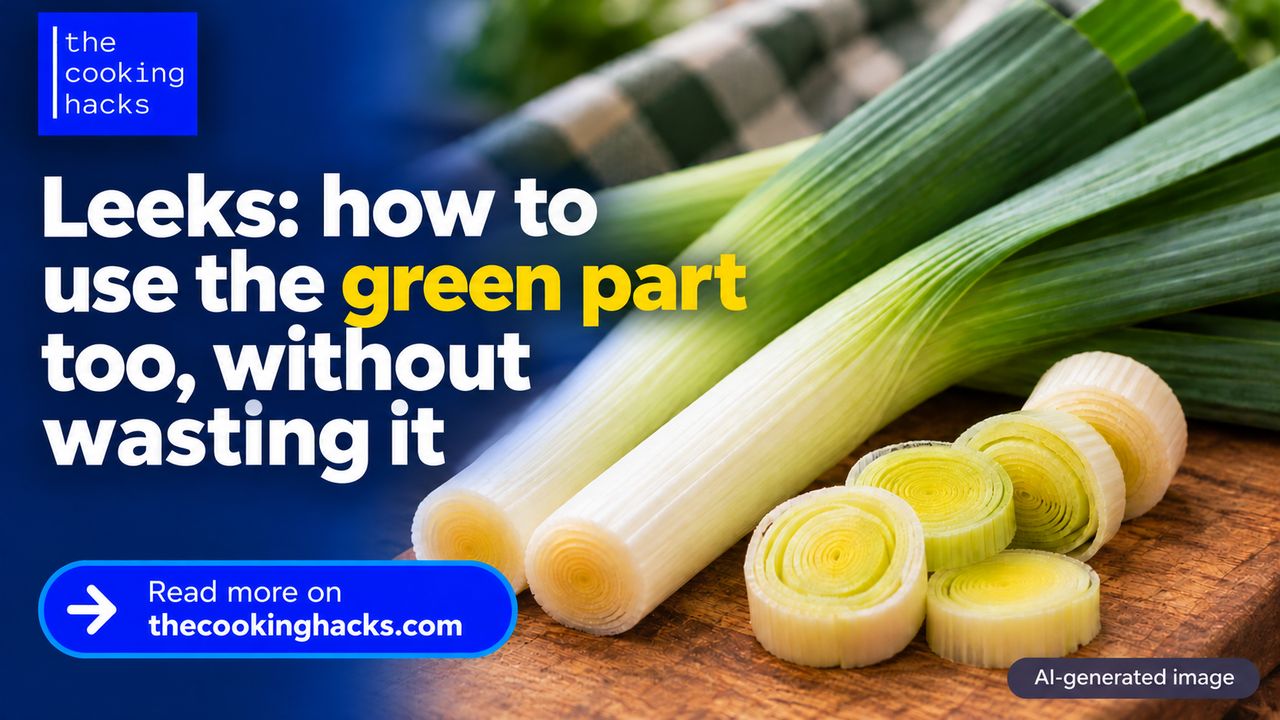
Leek greens are edible, including the dark green leaves that are often discarded when preparing leeks. They are usually tougher and more fibrous than the white part, but they can add flavour to soups, stocks, savoury pies and slow-cooked dishes. The key is to match the cooking method and the size of the cut to the texture of each part of the leek.
Which parts of a leek can you eat?
A leek has a white base, a light green middle section and darker green leaves. All three parts can be eaten when fresh, properly cleaned and in good condition. The roots, dried ends and damaged or spoiled sections should be removed.
The white part is tender and mild, making it suitable for creamy leek dishes, risotto, pies and quick sautés. The light green section works in many of the same recipes. Dark green leaves tend to be firmer and are often better suited to soups, stocks and dishes that cook for longer.
How to use dark green leek leaves
One of the easiest ways to cook leek greens is to add them to vegetable soup. Slice the leaves thinly and cook them with potatoes, carrots or other vegetables until tender. The soup can then be blended. If the texture remains stringy, passing it through a sieve can help.
Leek tops are also useful for making homemade vegetable stock. Cut them into manageable pieces, simmer them with other vegetables and strain the liquid before using it. This makes good use of their flavour without requiring the tougher leaves to be eaten whole.
For savoury pies, quiches or other fillings, choose the more tender leaves whenever possible. Finely slice and cook them before mixing them with eggs, cheese or other filling ingredients. Adding thick, raw pieces can leave an unpleasantly fibrous texture.
How should you cut leeks for different dishes?
Thin rounds are a good choice for soft, creamy leek dishes and risotto. Larger pieces work well in soups that will be blended. For fillings, slice the leaves finely across their length to shorten the fibres and help them soften during cooking.
Gentle cooking over moderate or low heat is often more effective than high-heat frying when the aim is a soft texture. A little water can be added to prevent the leeks from catching on the bottom of the pan. Cooking time will depend on the thickness and firmness of the pieces.
How to clean leeks properly
Leeks can trap soil and grit between their layers, particularly where the leaves begin to separate. To clean leeks properly, trim the roots and damaged sections, then split the leek lengthways and gently open the layers under clean running water.
Alternatively, slice the leek first and wash the pieces in a large bowl of water. Swish them around to loosen trapped grit, then lift the pieces out rather than pouring the dirty water back over them. Check that no soil remains before cooking.
How to choose and store fresh leeks
Look for firm leeks with fresh-looking leaves and no soft or deteriorating sections. Larger leeks are not automatically better for every recipe: the tenderness of the leaves can matter more than size when preparing a quick-cooked dish.
Store fresh leeks in the refrigerator’s vegetable drawer. The French produce organisation Les Fruits et Légumes Frais gives an indicative storage period of five days, although actual shelf life depends on freshness and storage conditions. Inspect the leeks regularly and use them before they deteriorate.
Leeks can also be cleaned, chopped and frozen in recipe-sized portions. Freezing can soften their texture, so frozen leeks are particularly convenient for cooked dishes such as soups and stews.
Should you separate the white and green parts?
Separating them can improve the finished dish. Use the white and light green sections when you want a delicate, tender result, and reserve tougher dark green leaves for stock or longer-cooked soups. If everything is going into a blended soup, the different sections can be combined as long as the cooking time and final texture are taken into account.
Using leek greens is not simply about reducing food waste. It is about recognising that different parts of the same vegetable behave differently during cooking and choosing the preparation that makes each part useful.
If you don't want to miss the important news, subscribe to The Cooking Hacks Telegram channels:
- Food Recall UK, receive news about food recalls to have a safe pantry
- Offers this week UK, to find out what are the latest offers from supermarkets