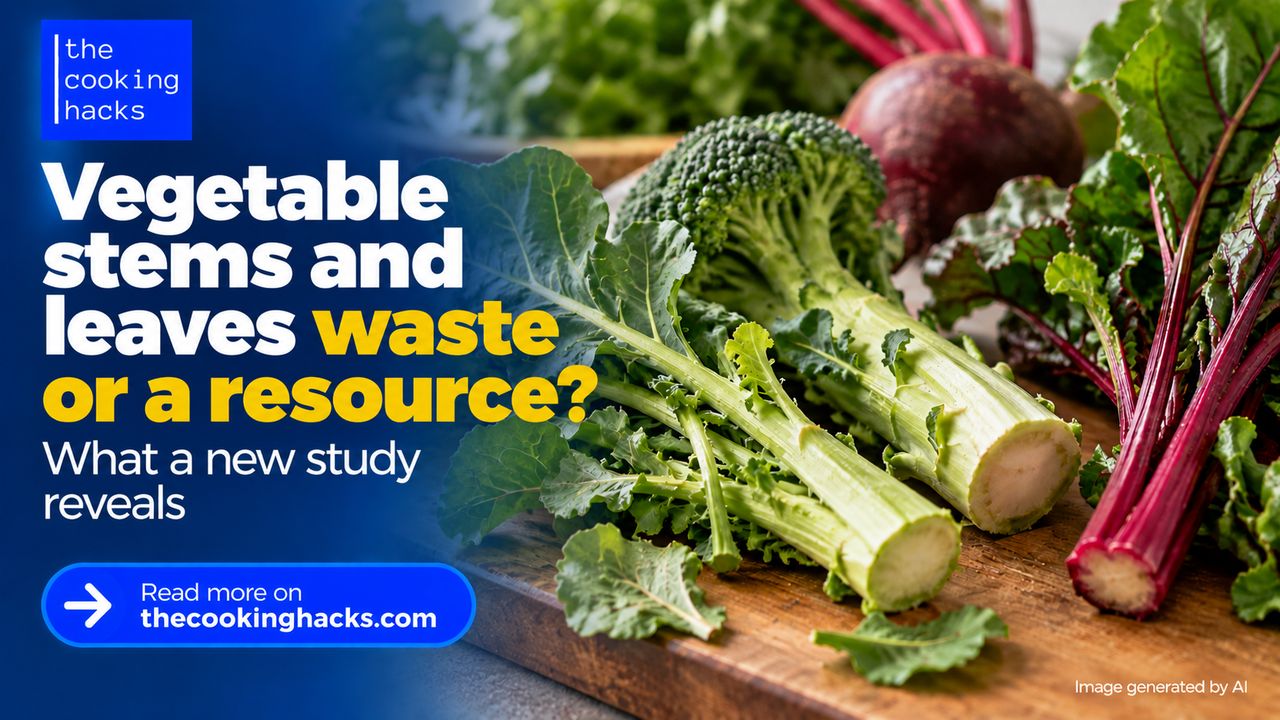
When we prepare broccoli, cauliflower, beetroot or radishes, some parts often go straight into the food-waste bin. But stems and leaves are not automatically waste. A new study published in the International Journal of Gastronomy and Food Science explored whether certain edible but commonly discarded vegetable parts could be turned into new foods, using a co-design process involving gastronomy professionals and consumers.
The research was carried out in Uruguay and focused on the stems and leaves of broccoli, cauliflower, beetroot, chard, turnip and radishes. The researchers selected these parts because they are widely recognised as edible yet are still frequently discarded in everyday use. That distinction matters: the study does not suggest that every stem, leaf, peel or other discarded plant part is safe or suitable to eat.
More than 200 ideas came from the co-design workshops
The study had two main stages. First, researchers held two co-creation workshops: one with gastronomy professionals and another with regular consumers. Together they generated more than 200 ideas across a wide range of categories, including ready-to-eat dishes, seasonings, fermented foods, snacks and beverages.
Eight concepts were then selected for an online study involving 198 participants. This was not a test of products already available on supermarket shelves, nor a nutritional comparison between conventional foods and upcycled alternatives. The researchers were mainly interested in how consumers responded to the concepts.
One finding stood out: familiar food formats appeared easier for consumers to accept.
Burgers, pasta and crackers were the most appealing concepts
The most familiar ideas performed best. Burgers containing vegetable stems and leaves, dried pasta enriched with stems and leaves, and crackers containing those same parts received the highest expected liking scores, averaging 7.3 out of 9. More than 85% of participants also considered these concepts likely to succeed in the market.
That does not mean these products were proven to taste better, provide more nutrients or be healthier than conventional versions. The results refer primarily to consumer perceptions of proposed product concepts, not to validated commercial foods or comparative nutrition trials.
Instead, the study suggests that upcycled ingredients may be easier to introduce when they appear in foods people already recognise. Familiarity, convenience and sensory appeal were among the main considerations identified during the design process.
Does this mean we should eat stems and leaves instead of throwing them away?
Not as a general rule. The research focused on specific vegetable parts that the authors describe as edible. It does not establish that every normally discarded part of a vegetable can safely be eaten.
A better interpretation is that some edible parts of vegetables may be underused rather than true waste. Before using an unfamiliar leaf, stem, peel or other plant part, its edibility and suitability for that specific use still need to be established.
There is another important limitation. Participants suggested that potential health benefits could be used to encourage consumers to try upcycled products. But those were consumer suggestions, not health benefits demonstrated by the study itself. The research focused on co-design, acceptance and perceived market potential.
Cutting food waste may also mean rethinking what we call “waste”
Perhaps the most useful takeaway is that food waste is influenced not only by what is technically edible, but also by cultural habits and by what consumers perceive as edible. The researchers tried to overcome that barrier by turning underused vegetable parts into foods that looked more familiar and practical.
For home cooking, that does not mean using every scrap. It means that when a vegetable part is genuinely edible, it may be worth asking whether it really needs to be discarded or whether it could become an ingredient in its own right.
If you don't want to miss the important news, subscribe to The Cooking Hacks Telegram channels:
- Food Recall UK, receive news about food recalls to have a safe pantry
- Offers this week UK, to find out what are the latest offers from supermarkets