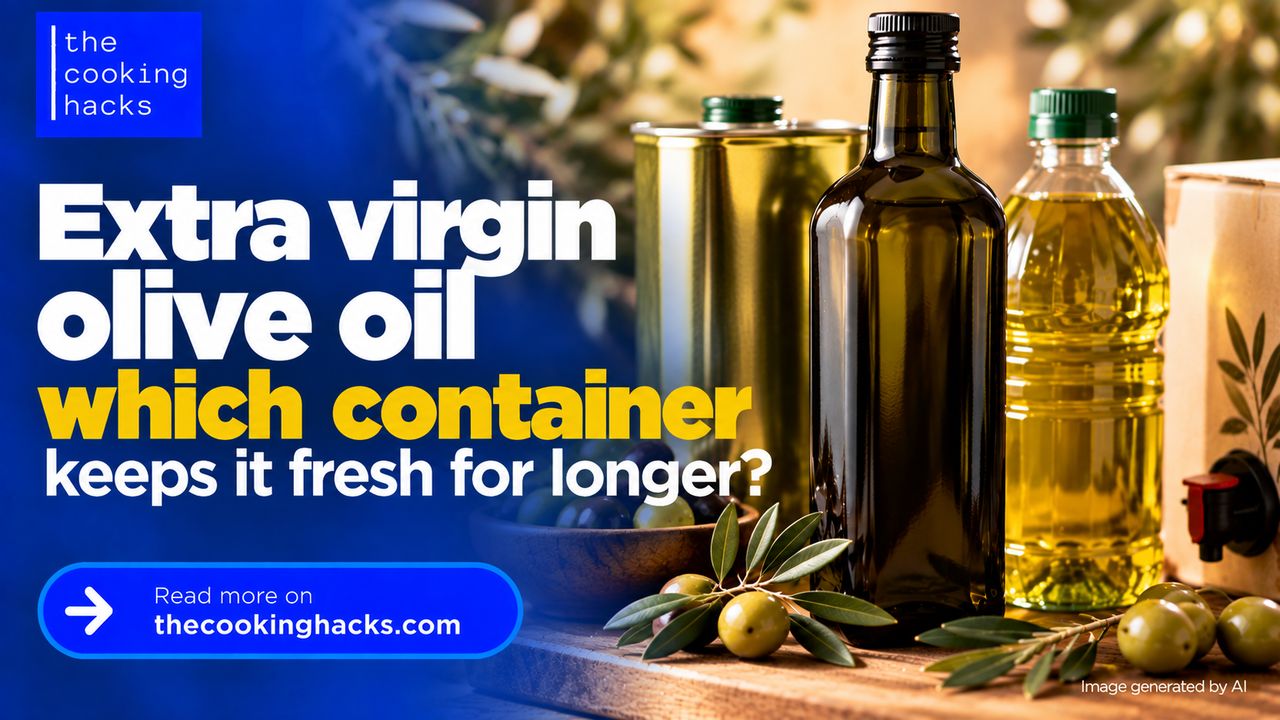
When choosing extra virgin olive oil, it is easy to focus on origin, price, variety or harvest date and treat the bottle as little more than packaging. But dark glass, metal, plastic and other formats do not protect olive oil in exactly the same way. A September 2026 review in Trends in Food Science & Technology concludes that interactions between the oil and its packaging can affect oxidative and sensory stability during storage. The review is available on ScienceDirect.
Does the olive oil container really matter?
Extra virgin olive oil gradually changes as it ages. Oxygen, light and higher temperatures speed up oxidation, which can reduce antioxidants, alter fresh aromas and eventually produce flavours and odours associated with rancidity. Packaging cannot stop this process indefinitely, but a good container can slow down some of the conditions that drive it.
Why dark glass and metal are useful
Dark glass combines two useful characteristics: the glass itself provides an effective barrier, while its colour reduces the amount of light reaching the oil. Clear glass still provides the physical barrier of glass but gives much less protection from light unless the bottle has another protective coating or covering.
Metal tins or cans can block light completely. The 2026 review therefore identifies dark glass and metal among the benchmark materials for protecting EVOO quality. That does not mean an oil is automatically better simply because it comes in a tin or dark bottle: packaging can preserve the quality an oil already has, but it cannot create quality that was not there to begin with.
What about olive oil in plastic bottles?
Plastic is more complicated than a simple “good or bad” label suggests. Different polymers and package designs have different barrier properties. PET is lightweight, inexpensive and practical, but it can allow more gas transmission than glass or metal. If the package also allows substantial light through, the oil may be exposed to two important drivers of oxidation.
Researchers in Italy put this question to a practical test in a 2026 Foods study. The same EVOO was stored in 3-litre containers made from green PET, bag-in-box packaging and chrome-plated tin. They were kept at 25°C/77°F under 12-hour light/dark cycles, while 75 ml of oil was removed each day for 40 days to simulate normal household use. The study is published in Foods.
Under those particular conditions, the PET-packaged oil deteriorated faster. After 40 days, alpha-tocopherol had fallen by 44% in PET, compared with 0.8% in bag-in-box and 5.3% in the metal container. Several phenolic and aroma-related compounds were also better retained in the other packages. This should not be read as proof that every plastic bottle will produce the same result: the authors stress that the findings apply to the specific EVOO, packages and experimental conditions tested. The full study is available through PubMed Central.
Why bag-in-box changes what happens after opening
A bag-in-box package works differently from a conventional bottle. The flexible inner bag collapses as oil is dispensed, helping to limit the amount of air entering the package. In the 2026 experiment, bag-in-box provided the best protection of the three systems tested, followed by the metal container.
That difference matters after a package has been opened. As you use oil from a normal bottle, the empty space above it becomes filled with air. Repeated opening also introduces fresh oxygen. This is one reason why buying the largest possible bottle is not necessarily the best way to keep EVOO fresh if it takes many months to finish.
So which olive oil container should you buy?
For storage, look for packaging that keeps out light and limits exposure to oxygen. Dark glass and metal are both well-established options. Bag-in-box can have an additional advantage for larger quantities because the package reduces the air replacing the oil as it is dispensed. Clear containers exposed to bright light provide less protection.
For UK shoppers, there is a particularly clear regulatory clue on the label: official guidance says pure olive oil labels must include storage advice telling consumers to keep the product away from heat and light. The UK government’s guidance explains the olive oil labelling requirements. The same principle is useful on either side of the Atlantic: keep the container tightly closed and away from a sunny counter, stovetop or oven.
For US readers, the UC Davis Olive Center similarly recommends storing olive oil in a cool, dark place and notes that dark glass, metal and bag-in-box systems provide useful protection from light or air. It also makes an important point for shoppers: the package itself does not tell you whether the oil inside was high quality in the first place. The UC Davis Olive Center provides further guidance on olive oil storage.
Bigger is not always better
Container size matters because oxidation does not stop once you bring the oil home. If a large bottle takes a very long time to finish, repeated opening and the growing air space inside can work against the protection offered by the package. A smaller bottle that you finish reasonably quickly may therefore make more sense for a household that uses little olive oil.
This does not mean there is a universal “correct” bottle size. A family that cooks with EVOO every day can get through a large container much faster than someone who only uses a small amount occasionally. The practical goal is to match the package size to your actual consumption rather than simply buying the biggest container available.
Is glass automatically the most sustainable choice?
Not necessarily. Environmental performance involves more than the material name printed on a recycling label. Package weight, transport, material use, recycling systems and end-of-life treatment all matter. The 2026 review also highlights a less obvious part of the equation: packaging has to preserve the food effectively.
Lightweight plastics, recycled materials, bio-based polymers and new high-barrier packaging may offer environmental advantages, but their performance, food-contact safety and ability to protect EVOO still need to be considered. For shoppers, this makes the question more useful than simply asking “glass or plastic?”: how well does this package protect the oil, and will I finish it in a reasonable time after opening?
FAQ
Is olive oil better in dark glass or a metal tin?
Both can protect olive oil well. Dark glass reduces light exposure, while metal blocks light. Oxygen exposure, storage temperature and how long the package remains open also affect quality.
Is olive oil in a plastic bottle lower quality?
Not necessarily. Packaging does not tell you the initial quality of the oil. Some plastic containers can, however, offer less protection against oxygen and light during storage than higher-barrier packaging.
Why should olive oil be kept in the dark?
Light accelerates reactions involved in oxidation, which can gradually change the oil’s chemical and sensory qualities.
Should olive oil be stored next to the stove?
No. Although it is convenient, the area around a stove or oven is exposed to heat. A closed cupboard away from heat and direct light is a better choice.
Is buying a large container of olive oil a good idea?
It can be if you use the oil quickly. If the container stays open for months, increasing exposure to oxygen can work against freshness. Choose a size that matches how much olive oil your household actually uses.
If you don't want to miss the important news, subscribe to The Cooking Hacks Telegram channels:
- Food Recall UK, receive news about food recalls to have a safe pantry
- Offers this week UK, to find out what are the latest offers from supermarkets