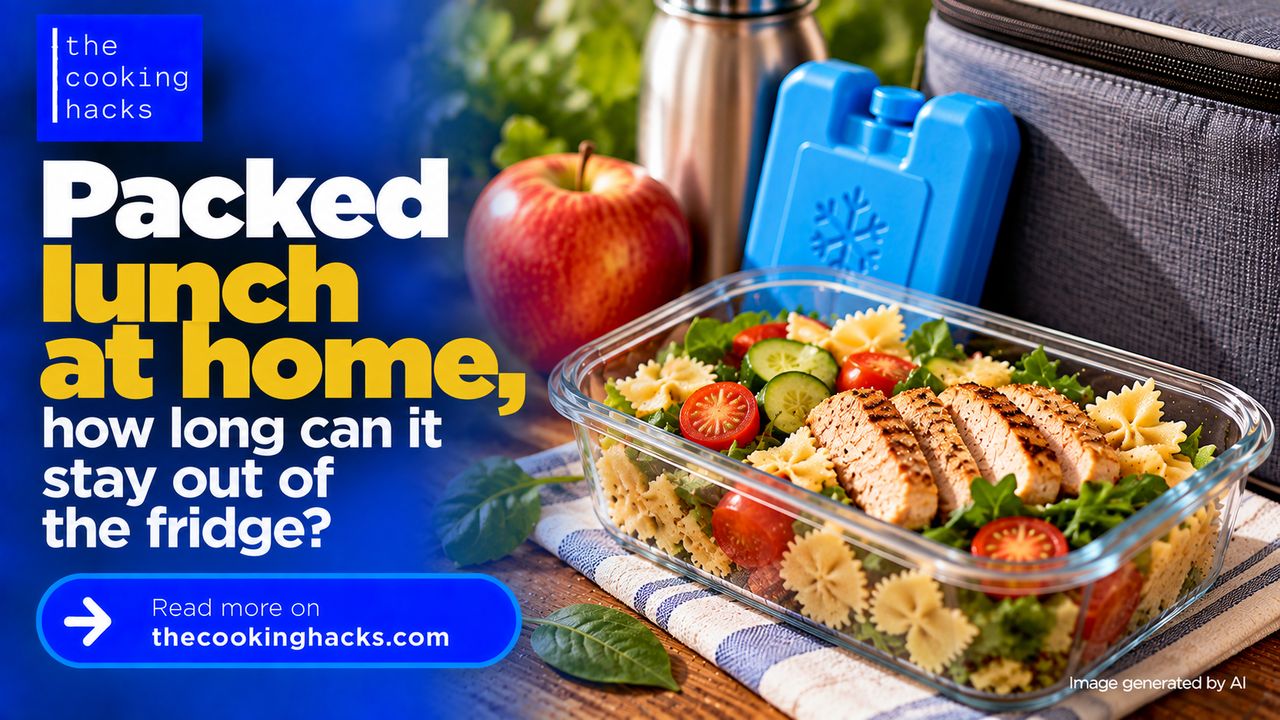
A packed lunch can spend several hours between your kitchen and lunchtime. If it contains perishable food, putting it in an ordinary backpack in the morning is not the same as keeping it refrigerated until noon.
The basic food-safety issue is time and temperature. Bacteria that may be present in perishable food can multiply when food is held at temperatures that favour their growth. That means packed-lunch safety depends not just on what you cook, but on how you cool, transport, store and, when necessary, reheat it.
Why does the journey to work or school matter?
A meal’s safety depends on more than the moment it was cooked. Cooling, overnight storage, the journey to work or school, the hours before lunch and reheating can all matter.
A 2026 Centre for Food Safety feature on people bringing lunch from home illustrates this with leftover chicken and rice carried during a two-hour commute and then insufficiently reheated. The useful lesson is broader than that example: food-safety problems can result from a chain of mistakes rather than one dramatic error.
A meal that was safely refrigerated overnight can therefore be mishandled the following morning.
Which packed lunches need to stay cold?
Perishable lunches can include cooked meat and poultry, eggs, many dairy products, cooked dishes and prepared salads or sandwiches containing ingredients that require refrigeration.
Whole fruit, bread, crackers and several shelf-stable foods are different. The USDA guidance specifically written for packed lunches distinguishes foods that can travel without a cold source from perishable foods that need to remain cold.
That distinction can make planning easier. If you know refrigeration will be impossible, choosing a lunch made from shelf-stable foods may be simpler than trying to keep a highly perishable meal cold for hours.
Can you prepare a packed lunch the night before?
Yes. Preparing it ahead can work well if cooling and refrigeration are handled correctly.
Cooked food intended for the following day should be cooled appropriately rather than left on the counter for hours. Larger quantities can be divided into smaller or shallower containers to help them cool more quickly.
Keep the prepared lunch refrigerated overnight and take it out when you are ready to leave.
How should you keep a packed lunch cold in the US?
For US consumers, the advice is particularly practical. The USDA recommends at least two cold sources for a packed lunch containing perishable food, such as freezer packs; a frozen bottle of water or juice can also help act as a cold source.
If a refrigerator is available at work or school, put the perishable food in it when you arrive. The insulated bag can then protect the lunch during the journey rather than having to replace refrigeration for the entire morning.
How long can perishable food stay out in the US?
USDA advises that perishable food should not be left at room temperature for more than two hours, or one hour when the temperature is above 90°F (32°C).
That should be understood as a safety limit, not a target. If you can refrigerate the meal immediately, there is no benefit in deliberately leaving it out for almost two hours.
Food kept properly cold in an insulated bag with effective cold sources is also different from food simply sitting at room temperature.
What about the UK?
UK guidance uses a somewhat different framework. The Food Standards Agency says leftovers can be eaten cold when they were properly cooked, cooled and refrigerated within two hours. It also describes 8°C to 63°C as the range in which bacteria may grow, which it refers to as the “Danger Zone”.
This is exactly why numerical food-safety rules should not be copied mechanically from one country to another. For a UK packed lunch, the practical message remains straightforward: food that requires refrigeration should be kept cold until it is eaten.
Can you tell whether lunch is safe by smelling it?
No. Smell and appearance can reveal some types of spoilage, but they are not a reliable test for pathogenic microorganisms.
A lunch does not become safe simply because it looks and smells normal. What happened to it during the previous several hours matters more.
Putting food back into a refrigerator after a long period of inappropriate storage also does not reset its temperature history.
Does microwaving the food make it safe again?
Proper reheating matters, but it should not be treated as a rescue method for poorly stored food.
Research and consumer guidance from the Food Standards Agency recommend reheating leftovers until they are steaming hot throughout. When using a microwave, stirring the food helps reduce the chance of leaving cold pockets while other areas become very hot.
So the sequence matters: cool safely, keep the meal at an appropriate temperature, and then reheat thoroughly if it is intended to be eaten hot.
What about rice in a packed lunch?
Rice can be taken to work or school, but the important part starts before it enters the lunch box.
Cooked rice that spends too long at room temperature before refrigeration is not equivalent to rice that has been cooled and refrigerated correctly. Reheating later does not make the earlier handling irrelevant.
For a rice-based packed lunch, think about cooling, overnight refrigeration, cold transport and reheating as one continuous process, rather than four unrelated steps.
Can you pack a hot lunch instead?
Yes, but then you need the opposite temperature strategy.
Hot food such as soup or chilli needs an appropriate insulated container designed to keep it hot. The objective is not to put lukewarm food into a container and leave it there for several hours: either maintain the food properly hot or keep it properly cold and reheat it later.
This distinction is especially useful when choosing what to take to work or school: the lunch container and the food inside it should be planned together.
The easiest packed-lunch routine
A safe packed lunch does not have to be complicated. Prepare it with clean utensils, cool cooked foods appropriately, refrigerate them overnight and pack cold foods immediately before leaving.
If the meal contains perishable food and there is no refrigerator at your destination, use an insulated lunch bag and adequate cold sources. If there is a refrigerator, use it when you arrive.
The useful question is not simply “Will this still taste fine at lunchtime?” It is “How am I keeping this food at the right temperature until I eat it?”
Frequently asked questions
Can I leave my packed lunch in my backpack until noon?
Not if it contains perishable foods and the backpack provides no temperature control. Use an insulated lunch bag with cold sources or refrigerate the meal when you arrive.
Can I make my packed lunch the night before?
Yes. Cool cooked food appropriately, refrigerate the lunch overnight and keep perishable items cold during transport.
How long can perishable food stay at room temperature in the US?
USDA advises no more than two hours, or one hour when the temperature is above 90°F (32°C).
Are ice packs necessary in an insulated lunch bag?
For US packed lunches containing perishable foods, USDA recommends at least two cold sources. If a refrigerator is available when you arrive, use it.
Can I microwave a lunch that has been left out too long?
Do not rely on reheating to compensate for improper storage. Food should be handled safely before reheating, and food intended to be eaten hot should then be heated thoroughly.
If you don't want to miss the important news, subscribe to The Cooking Hacks Telegram channels:
- Food Recall UK, receive news about food recalls to have a safe pantry
- Offers this week UK, to find out what are the latest offers from supermarkets