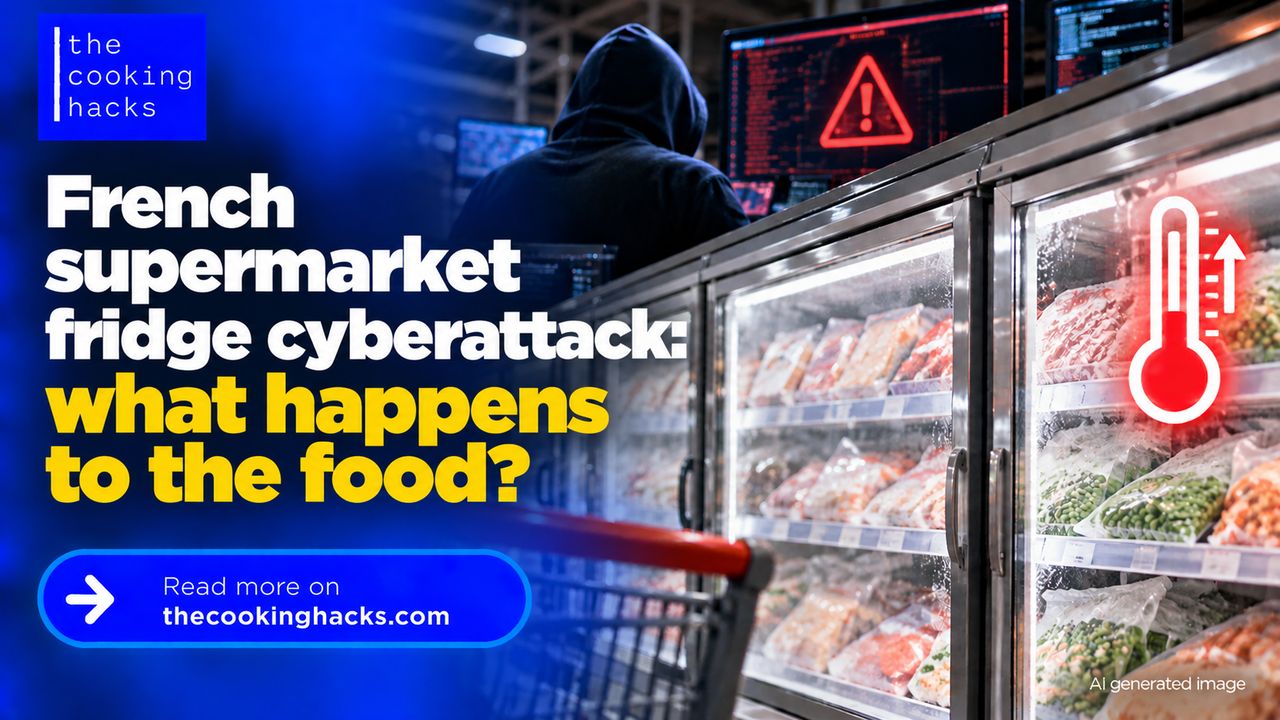
A cyberattack affecting refrigeration systems in hundreds of French supermarkets has forced retailers to dispose of fresh and frozen food. The incident raises a question that matters just as much at home: if a fridge or freezer stops keeping food cold, how do you know whether it is still safe to eat? The answer depends on the type of food, how warm it became and how long it stayed at that temperature.
What happened to French supermarket fridges?
On 11 and 12 October 2026, attackers interfered with connected refrigeration equipment at several French supermarket chains. Intermarché, Coopérative U and Carrefour were among the retailers affected. According to AFP, refrigeration units were forced into defrost cycles, resulting in food losses. Fires were also reported.
Investigations are continuing, and the final scale of the financial damage has not been established. What is clear is that interference with refrigeration controls can affect food safety even when products are sealed and their packaging looks undamaged.
Why does a break in the cold chain matter?
The cold chain is the system of keeping food at the right temperature from production and transport through to storage and sale. Chilling slows bacterial growth, while freezing prevents most bacteria from multiplying while food remains frozen. Neither process reliably destroys every harmful microorganism.
If food warms up, bacteria that survived refrigeration or freezing may start multiplying again. That is why a fridge failure is not simply a problem of melted ice or changes in texture: it can become a food safety issue.
Is food safe if it has started to defrost?
Not every defrosted item presents the same risk. Food that is still frozen is different from food that has thawed but remained properly chilled, and both are different from food that has been left warm for several hours.
For UK households, the Food Standards Agency’s emergency food safety guidance is the appropriate starting point when a power cut or refrigeration failure affects food storage. The key questions are whether the food has remained sufficiently cold and whether its safe storage conditions can be established.
Do not assume that food is safe because it still feels slightly cool or looks normal. If you cannot establish how long highly perishable food has been too warm, particularly meat, fish, dairy products or ready-to-eat meals, the safer decision is to discard it.
Can you refreeze food that has thawed?
For UK consumers, it is important to distinguish food that was safely defrosted in the fridge from food that thawed during an uncontrolled refrigeration failure. They are not the same situation. Food exposed to unsafe temperatures cannot be made safe simply by putting it back in the freezer.
Freezing food before its use-by date is a different matter. When food is suitable for freezing and has been handled correctly, it can help reduce waste. Our guide to freezing food before its use-by date explains the UK rules and why safe defrosting matters afterwards.
What should shoppers look out for?
- Pick up chilled and frozen products towards the end of your shopping trip.
- Use an insulated bag when needed and put food away promptly at home.
- Follow the storage temperatures and instructions on the packaging.
- If a shop reports a refrigeration problem, ask staff whether the affected products have been assessed and cleared for sale.
Smell and appearance are not reliable tests for harmful bacteria, and tasting questionable food is not a safe way to check it. The French cyberattack is an unusual example of a familiar food safety principle: the temperature history of perishable food matters more than whether its packaging appears intact.
FAQ
Does partially defrosted food have to be thrown away?
Not automatically. Safety depends on the food, the temperature reached and how long it was exposed. If you cannot establish that highly perishable food stayed at a safe temperature, it is safer to discard it.
Can you refreeze food after a freezer failure?
Do not refreeze food simply because it still looks acceptable. Whether it can be used depends on its temperature history and the relevant UK food safety guidance. Refreezing cannot reverse unsafe storage.
Can you tell whether food is safe by smelling it?
No. Harmful microorganisms do not always cause noticeable changes in smell, taste or appearance. Never taste questionable food to test its safety.
If you don't want to miss the important news, subscribe to The Cooking Hacks Telegram channels:
- Food Recall UK, receive news about food recalls to have a safe pantry
- Offers this week UK, to find out what are the latest offers from supermarkets