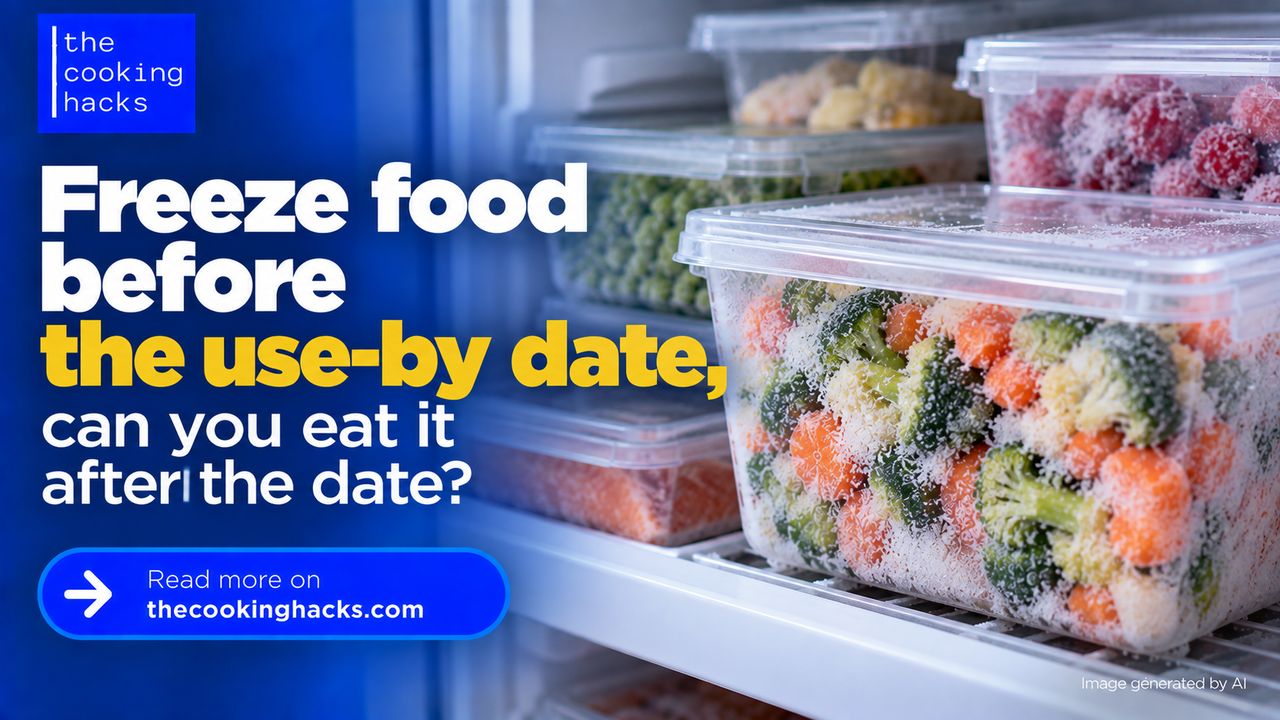
You have food in the fridge that you will not manage to eat before the date printed on the package. Can you freeze it now and eat it after that date has passed? In many cases, yes — but the answer depends on whether the food is suitable for freezing, when it was frozen and, importantly, which country the label comes from.
This distinction matters because a UK “use-by” date is a food-safety date, whereas in the United States most date labels on food are not federal safety deadlines. The same English words on two packages can therefore carry different regulatory implications.
UK: freeze food before its use-by date
For UK consumers, the rule is straightforward. Food carrying a use-by date should not be eaten after that date if it has simply remained chilled, even when it looks or smells normal.
The Food Standards Agency says food can be frozen before its use-by date. Once defrosted, the FSA guidance says it should be cooked within 24 hours.
So if a packet has a use-by date of 25 September and you freeze it safely on 23 September, the fact that 25 September passes while the food remains frozen does not mean you must throw the frozen food away on that date. What matters next is safe frozen storage and correct handling after defrosting. Long storage can still affect quality, and our guide to freezer burn and whether affected frozen food is safe to eat explains why quality deterioration is not automatically the same as a food-safety problem.
Freezing does not make expired food safe again
Freezing is useful because low temperatures stop microbial growth while the food remains frozen, but it should not be treated as a reset button.
If food has already been kept too long, mishandled or reached a safety deadline before being frozen, putting it in the freezer does not reverse what happened beforehand. That is why the decision to freeze should be made while the food is still suitable to eat.
The updated EUFIC food-waste guidance likewise advises freezing suitable food before it reaches its use-by date when it will not be eaten in time.
Freezing can also affect texture and performance even when food remains usable. One practical example is what happens to bread and pizza dough when it is frozen, where storage time and freezing conditions can influence the final result.
How should food be defrosted in the UK?
Defrosting is part of food safety, not simply a matter of waiting for the ice to disappear.
For food frozen before a UK use-by date, the important practical rule is the FSA’s 24-hour period after defrosting. The package instructions should also be followed, particularly when the manufacturer gives a specific freezing or defrosting method.
This is why writing the freezing date on homemade portions or products moved into another freezer-safe container can be useful: it makes it easier to know what is in the freezer and how it has been handled. Similar time-and-temperature considerations apply after cooking, as explained in our guide to storing and reheating leftovers from the fridge.
USA: “use-by” usually does not mean the same thing
The situation is different in the United States. According to the USDA Food Safety and Inspection Service, except for infant formula, food product dating is generally not required by federal law and is not an indicator of food safety.
US packages can carry phrases such as “Best if Used By,” “Sell-By,” “Use-By” and “Freeze-By.” USDA explains that “Best if Used By” concerns peak quality, while a “Freeze-By” date indicates when a product should be frozen to maintain its best quality. A US “Use-By” date generally refers to peak quality too, with infant formula being the important safety exception.
That means it would be misleading to apply the UK rule about use-by dates automatically to an American package.
How long is food safe in the freezer in the US?
USDA explains that food kept continuously frozen at 0°F (−18°C) or below can remain safe for a very long time, while recommended freezer-storage periods are primarily about quality. Texture, flavour and other characteristics can deteriorate even though freezing prevents microbial growth.
Freezing sooner rather than later also gives better results. USDA notes that foods frozen while still at high quality generally emerge from the freezer in better condition than foods frozen near the end of their useful refrigerated life.
How should frozen food be thawed in the US?
USDA recognises three safe thawing methods: in the refrigerator, in cold water and in the microwave. Refrigerator thawing is the slowest but requires the least immediate intervention; food thawed in cold water or a microwave generally needs to be cooked promptly.
US guidance on refreezing also differs from some European consumer advice. USDA says food thawed safely in the refrigerator can generally be refrozen without cooking, although quality may decline because moisture is lost during thawing.
This is another reason not to produce one supposedly universal rule for UK and US readers: the relevant official guidance is not identical.
What should you check before putting food in the freezer?
First, make sure the product is suitable for freezing and read any instructions on the package. Freeze it while it is still properly stored and in good condition rather than using freezing as a last attempt to rescue questionable food.
Second, package it appropriately and note the date it went into the freezer. Finally, when you want to use it, follow the relevant local guidance for thawing and any product-specific instructions.
The central idea is simple: freezing can extend the period in which food can be stored, but it does not erase unsafe handling that happened before freezing or remove the need for safe handling afterwards.
Can I eat food after its use-by date if I froze it before the date?
In the UK, yes, provided the food was suitable for freezing and was safely frozen before its use-by date; FSA guidance says to cook it within 24 hours after defrosting.
Can I freeze food on its UK use-by date?
FSA guidance allows food to be frozen before the use-by date has passed. Freezing earlier, rather than leaving it until the last moment, also helps preserve quality.
Does freezing kill bacteria?
Freezing stops microbial growth while food remains frozen but does not reliably kill all microorganisms. Safe handling before freezing and after thawing still matters.
Does a US “use-by” date mean the food becomes unsafe afterwards?
Generally no. USDA says that, except for infant formula, US food date labels are not federal food-safety dates. Many indicate quality rather than safety.
Can thawed food be refrozen in the US?
USDA says food thawed safely in the refrigerator can generally be refrozen without cooking, although there may be some loss of quality.
If you don't want to miss the important news, subscribe to The Cooking Hacks Telegram channels:
- Food Recall UK, receive news about food recalls to have a safe pantry
- Offers this week UK, to find out what are the latest offers from supermarkets