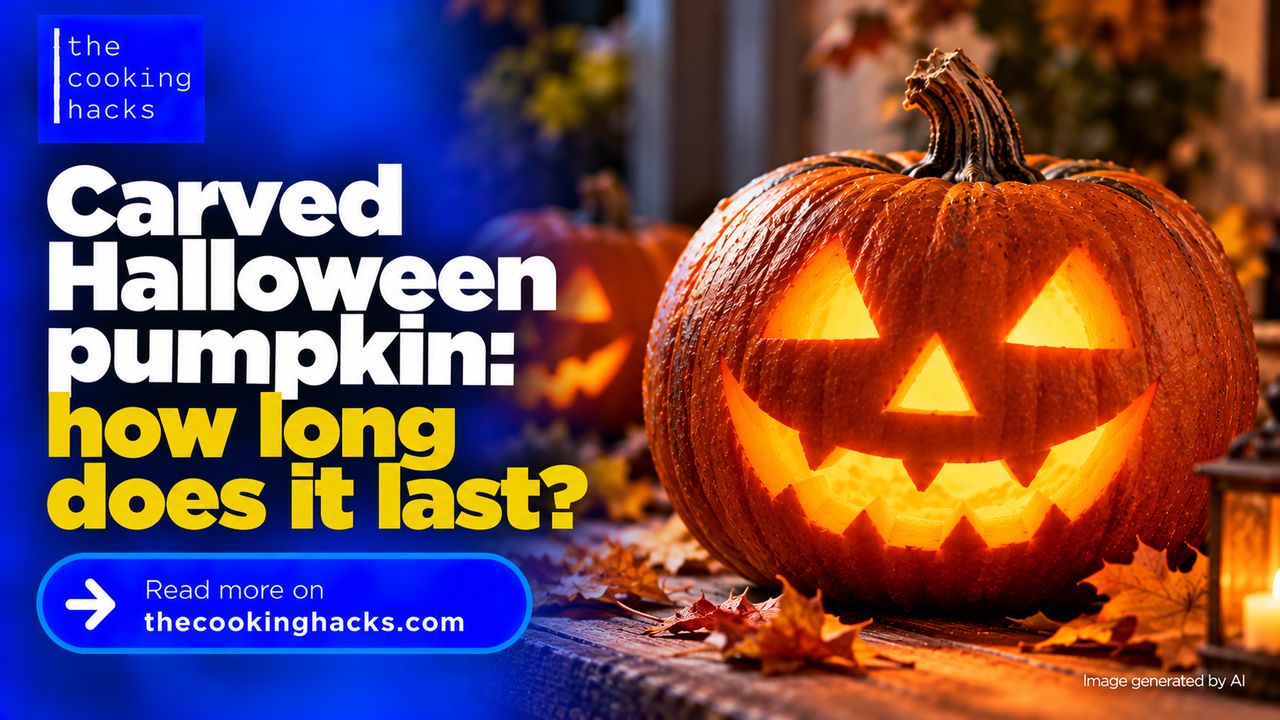
A carved Halloween pumpkin may begin to deteriorate within just a few days. According to Kansas State University Extension, a carved jack-o’-lantern can develop noticeable signs of rotting within a few days to about a week. Its lifespan depends on temperature, humidity, the pumpkin’s original condition and how it is displayed.
This is why carving too early can leave your Halloween decoration looking shrivelled or mouldy before 31 October. A few precautions can help slow deterioration, but no household treatment guarantees a particular lifespan.
How long does a carved pumpkin last?
A mature, undamaged whole pumpkin may keep for weeks or months under suitable storage conditions. Carving changes that.
Once the skin is cut, the exposed flesh starts losing moisture. It also becomes more vulnerable to the microorganisms responsible for decay.
The estimated display period is generally measured in days, not weeks. This is a general guideline, not an expiry date. Warm weather, direct sunlight and excess moisture can shorten the display period considerably.
If you are planning ahead, it is usually better to store your pumpkin whole and carve it closer to Halloween. Our guide to storing whole and cut pumpkins and winter squash explains why their storage requirements differ.
Why do carved pumpkins shrivel or rot?
Carving exposes the pumpkin’s moist interior to air. As water evaporates, the cut edges may shrink, wrinkle and lose their shape.
South Dakota State University Extension explains that the exposed surfaces are also susceptible to fungi, bacteria and other organisms that contribute to decay.
- Drying: the edges shrink, curl or become wrinkled.
- Rotting: areas become soft, sunken, slimy or unpleasant-smelling.
- Mould: visible fungal growth develops, sometimes appearing fuzzy or velvety.
A wrinkled pumpkin is not necessarily mouldy. However, soft and wet patches may indicate decay even before obvious mould appears. Our separate guide explains when mould on food means it should be thrown away.
How can you keep a carved pumpkin fresh for longer?
Start with a mature, firm pumpkin without visible damage. Before carving, clean the outside and use clean knives, scoops and other tools.
Remove the seeds and stringy material from the cavity as thoroughly as possible. Leftover material can provide additional surfaces where microorganisms may grow.
Where you display the pumpkin also matters. A temperature of approximately 50–60°F (10–16°C) is recommended for carved pumpkin displays.
Avoid direct sunlight, heat sources and freezing conditions. Freezing can damage the flesh, making it deteriorate quickly once thawed.
If you carve a few days before displaying your pumpkin, Iowa State University Extension suggests that refrigeration can help maintain its appearance for a short period.
For lighting, choose an LED candle or another electric light rather than a real flame. Heat from traditional candles can accelerate deterioration.
Does petroleum jelly or bleach help preserve carved pumpkins?
Some US university extension services recommend applying a thin layer of petroleum jelly to cut edges to reduce moisture loss.
This may help slow drying, but it does not guarantee protection against mould or rot.
Other extension publications discuss disinfectant treatments, including bleach solutions, for pumpkins intended strictly for decoration. However, chemical concentrations and safe handling instructions matter. Do not improvise household chemical mixtures or assume that a treated pumpkin remains suitable for food.
Any pumpkin treated with non-food-safe products should be kept for decoration only. For most households, starting with a healthy pumpkin, using clean equipment and choosing a suitable display location are the simplest precautions.
How can you tell when a carved pumpkin needs to be discarded?
Check your jack-o’-lantern regularly, especially if it is displayed outdoors.
Visible mould, unpleasant smells, slimy surfaces, significant softening or structural collapse indicate that the pumpkin is deteriorating.
Once these signs appear, remove the decoration rather than trying to save it by cutting away the affected areas.
Minor wrinkling may initially be caused by moisture loss, but it is still a sign that the pumpkin is no longer in its original condition.
Can you eat a pumpkin after using it as a Halloween decoration?
A pumpkin that has been carved and displayed should not be used for cooking. During display, it may be exposed to dirt, insects, microorganisms and potentially non-food-safe treatments.
University of Connecticut Extension advises against eating pumpkins previously used as carved decorations, even after cooking.
However, if the pumpkin variety is edible, suitable flesh can be collected during preparation, before the decoration is displayed, using appropriate food hygiene practices. Our article on whether Halloween pumpkin flesh is edible explains when it can be recovered for cooking.
When should you carve your pumpkin for Halloween?
If you want your jack-o’-lantern to look its best on Halloween night, carve it within the final few days before 31 October.
Keeping the pumpkin whole until then gives you a better chance of avoiding premature drying and decay.
Remember that outdoor conditions can make a substantial difference. Warm weather, rain and freezing temperatures may all shorten the life of your decoration.
For decorations that need to be ready weeks in advance, consider leaving pumpkins uncarved or using reusable Halloween decorations instead.
How many days before Halloween should I carve my pumpkin?
Ideally, carve it only a few days before 31 October. Noticeable decay may develop within a few days to about a week, depending on the conditions.
Can I put a carved pumpkin in the fridge?
Yes, temporarily before displaying it. Iowa State University Extension notes that refrigeration can help keep a carved pumpkin looking presentable for a few days.
Does a wrinkled pumpkin mean it has mould?
Not necessarily. Wrinkling may be caused by moisture loss, while mould involves visible fungal growth. Soft, slimy patches can also indicate rot.
Can I cook a pumpkin after displaying it as a jack-o’-lantern?
No. A displayed carved pumpkin may have been contaminated or treated with non-food-safe substances. Recover any edible flesh during preparation, before the pumpkin is displayed.
If you don't want to miss the important news, subscribe to The Cooking Hacks Telegram channels:
- Food Recall UK, receive news about food recalls to have a safe pantry
- Offers this week UK, to find out what are the latest offers from supermarkets