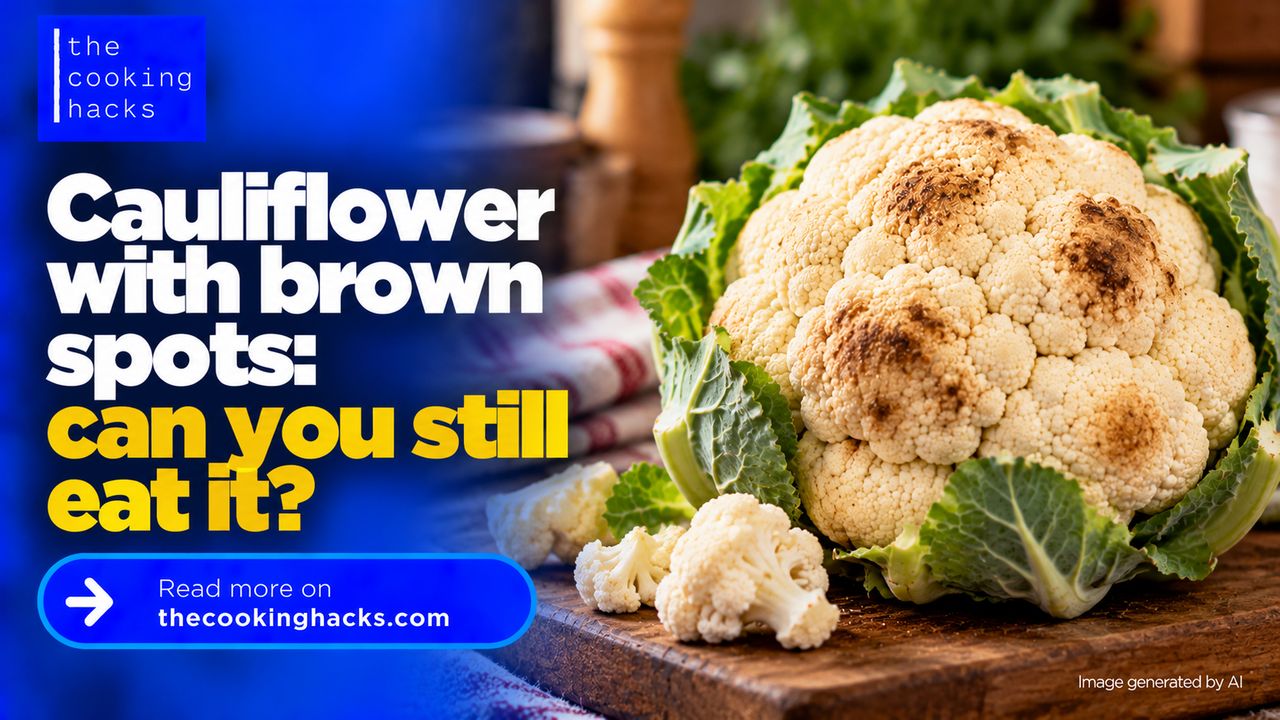
Brown spots on cauliflower do not always mean it needs to be thrown away. A few small, dry, superficial marks may be caused by bruising if the rest of the head is firm and has no unusual smell. However, widespread dark patches, soft or slimy areas and visible mould can be signs of spoilage.
To decide whether cauliflower is still suitable for cooking, look beyond the colour. Texture, smell and the extent of the spots all matter. Here’s how to tell a minor blemish from a more serious problem.
Why does cauliflower develop brown spots?
A cauliflower head is made up of tightly packed, delicate florets. They can be damaged during harvesting, transport or even while carrying groceries home.
According to the University of California, Davis Postharvest Research and Extension Center, bruising can cause rapid browning and contribute to decay. Prolonged storage and unsuitable temperatures can also affect the appearance and quality of cauliflower.
Not every brown mark has the same cause. Some are minor surface defects, while others may be linked to plant diseases or rotting. Colour alone cannot reliably tell you which is which.
Can you cut brown spots off cauliflower?
If the cauliflower has only a few small, dry, superficial brown spots and the rest of the head is firm and fresh-smelling, you may be able to trim the affected areas before cooking.
Oregon State University Extension recommends trimming brown spots before preparing cauliflower. This advice applies to minor blemishes, not visible mould or rotten tissue.
Check the underside of the head and between the florets as well. If a patch extends deep into the cauliflower, covers a large area or is accompanied by soft tissue, do not assume that removing the discoloured part will make the rest safe.
When should you throw cauliflower away?
Dark patches become more concerning when the cauliflower also changes texture. Utah State University Extension identifies dark brown or black spots and soft, mushy or slimy areas as signs of spoilage.
- Small, dry surface marks: these may be minor blemishes if the rest of the cauliflower is in good condition.
- Deep or widespread dark patches: these require caution, particularly when the head is losing firmness.
- Soft, wet or slimy areas: these are signs of deterioration, and the cauliflower should be discarded.
- Visible mould or an unpleasant smell: do not try to save the cauliflower simply by cutting away the affected areas.
The University of Minnesota Extension also describes plant diseases that can produce dark, sunken areas on cauliflower heads. The exact cause cannot be identified from colour alone.
Are brown spots on cauliflower the same as mould?
No. A bruise may leave a small, dry brown patch. Mould is visible fungal growth that can look fuzzy, velvety or powdery, sometimes appearing between the florets.
If mould is growing on the cauliflower head, the cautious choice is to discard it. Its tightly packed florets make it difficult to assess how far the deterioration has spread. Our separate guide explains when mould on food means it should be thrown away.
How should you store cauliflower to prevent spoilage?
Keep fresh cauliflower in the refrigerator’s vegetable drawer and avoid crushing it under heavier groceries. Leave it dry during storage and rinse it under running water just before preparing it.
The University of Kentucky Extension recommends storing cauliflower unwashed in a bag in the refrigerator and using it within approximately one week. This is a general guideline rather than a guaranteed shelf life.
Pre-cut florets lose freshness more quickly than a whole head. For packaged, ready-cut cauliflower, follow the storage instructions and any dates printed on the label.
Can cooking make brown cauliflower safe to eat?
If the brown marks are only small, dry surface blemishes and the cauliflower is otherwise firm with no signs of spoilage, you can trim the affected areas, rinse the vegetable and cook it as usual.
Cooking is not a reliable way to make mouldy or rotten cauliflower safe. Boiling, steaming or roasting does not automatically make a spoiled vegetable suitable for eating.
The important decision comes before cooking: a minor cosmetic defect does not necessarily mean food waste, but visible mould, sliminess and rotting should not be ignored.
Can you eat cauliflower with small brown spots?
Sometimes. If the spots are small, dry and superficial and the cauliflower is firm with no unusual smell, you may be able to trim them away. This does not apply to mould or rot.
Are black spots on cauliflower always mould?
No. Dark spots can have different causes, including plant diseases. Deep or widespread patches, especially alongside soft tissue, are reasons to discard the cauliflower.
Can you cook cauliflower that has started turning brown?
Only if the browning is a minor surface defect and there are no other signs of spoilage. Cooking does not automatically make mouldy or rotten cauliflower safe.
How long does cauliflower last in the fridge?
Approximately one week under suitable conditions, according to the University of Kentucky Extension. Actual shelf life depends on freshness and storage.
If you don't want to miss the important news, subscribe to The Cooking Hacks Telegram channels:
- Food Recall UK, receive news about food recalls to have a safe pantry
- Offers this week UK, to find out what are the latest offers from supermarkets