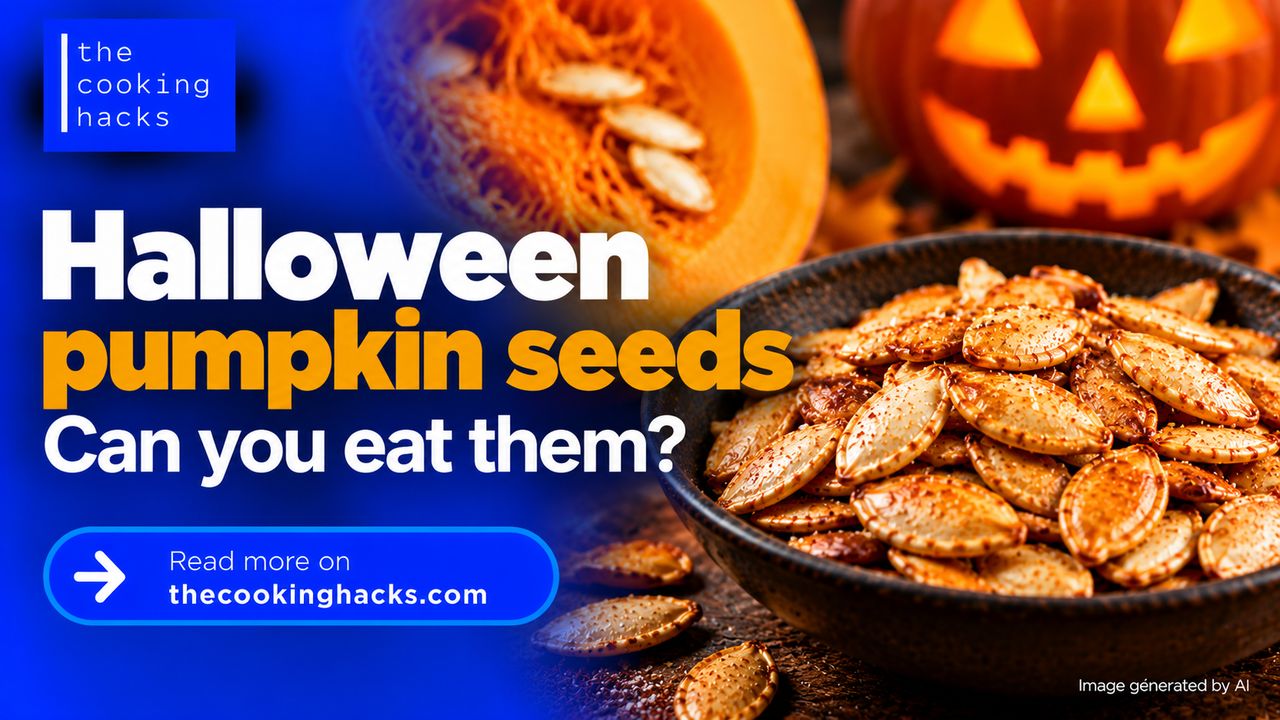
Carving a Halloween pumpkin usually leaves behind a bowl of seeds tangled in stringy pulp. Instead of throwing them away, you can roast and eat seeds from a sound, food-grade pumpkin that has just been cut open.
The important distinction is when the seeds are collected. Seeds removed while preparing a fresh pumpkin are not the same as seeds left inside a carved jack-o’-lantern for several days.
Are Halloween pumpkin seeds edible?
Yes. Seeds from the pumpkins commonly grown for Halloween carving are generally edible, even when the flesh of a large carving pumpkin is less appealing for cooking.
The University of Connecticut Extension specifically recommends saving seeds from pumpkins before carving them.
Use a sound pumpkin intended for food use. Do not assume that every decorative gourd is edible. Discard seeds that are mouldy, rotten or otherwise deteriorated.
Can you roast seeds from a pumpkin that has already been carved?
Collect the seeds when you first open the pumpkin, before leaving it on display.
A carved pumpkin exposed indoors or outdoors for several days may become contaminated or start to decay. University of Connecticut Extension advises against eating pumpkins that have already been carved and displayed.
Roasting is not a reliable way to make spoiled seeds safe. If the pumpkin is deteriorating, do not try to salvage its contents for food.
How to clean pumpkin seeds
Scoop the seeds and stringy pulp from the centre of the pumpkin. Separate the seeds by hand, then transfer them to a colander.
Rinse thoroughly under running water, rubbing away the remaining fibres. Discard damaged or mouldy seeds and pat the rest dry with a clean towel.
The National Center for Home Food Preservation recommends washing away the clinging pumpkin tissue before drying.
Why dry pumpkin seeds before roasting?
Excess moisture can prevent the seeds from becoming crisp.
For immediate preparation, spread the washed seeds on a clean towel and pat them thoroughly dry. For more complete drying, the National Center for Home Food Preservation describes using a dehydrator at 115–120°F (46–49°C) for one to two hours, or a very low oven for several hours, stirring frequently.
Drying and roasting are separate steps. Drying removes moisture; roasting develops flavour and texture.
How to roast dried pumpkin seeds in the oven
For seeds that have already been dried:
- Preheat the oven to 250°F (about 120°C).
- Toss the seeds with a little oil, salt or your preferred seasoning.
- Spread them in a single layer on a baking tray.
- Roast for approximately 10–15 minutes, stirring and checking regularly.
- Allow the seeds to cool before eating.
This is the method published by the National Center for Home Food Preservation. Other recipes use higher temperatures and different cooking times, particularly for freshly washed seeds. Follow one complete method rather than mixing its temperature with another recipe’s timing.
Can you eat the white pumpkin seed shells?
Yes. The white outer hull is edible, although it can be fibrous and tough to chew.
You can eat roasted seeds whole or crack the shells and remove the green kernels. The shelled green pumpkin seeds sold in shops are often called pepitas.
The University of Alaska Fairbanks Cooperative Extension explains that both hulled and unhulled seeds can be eaten. Whole hard seeds may present a choking hazard for young children.
How should roasted pumpkin seeds be stored?
Cool the seeds completely before transferring them to a clean, airtight container. Avoid sealing them while warm, as condensation can introduce moisture.
For home-prepared dried or roasted seeds, University of Alaska Fairbanks Cooperative Extension recommends refrigerating for no more than 10–14 days. Freeze them for longer storage.
Discard seeds that become mouldy, smell rancid or show other signs of spoilage.
What can you do with roasted pumpkin seeds?
Enjoy them as a snack, season them with paprika or garlic, or sprinkle them over salads, roasted vegetables and pumpkin soup.
The best time to save them is before the jack-o’-lantern goes on display. That way, Halloween carving can produce both a decoration and a snack without relying on food that has been left exposed.
If you don't want to miss the important news, subscribe to The Cooking Hacks Telegram channels:
- Food Recall UK, receive news about food recalls to have a safe pantry
- Offers this week UK, to find out what are the latest offers from supermarkets