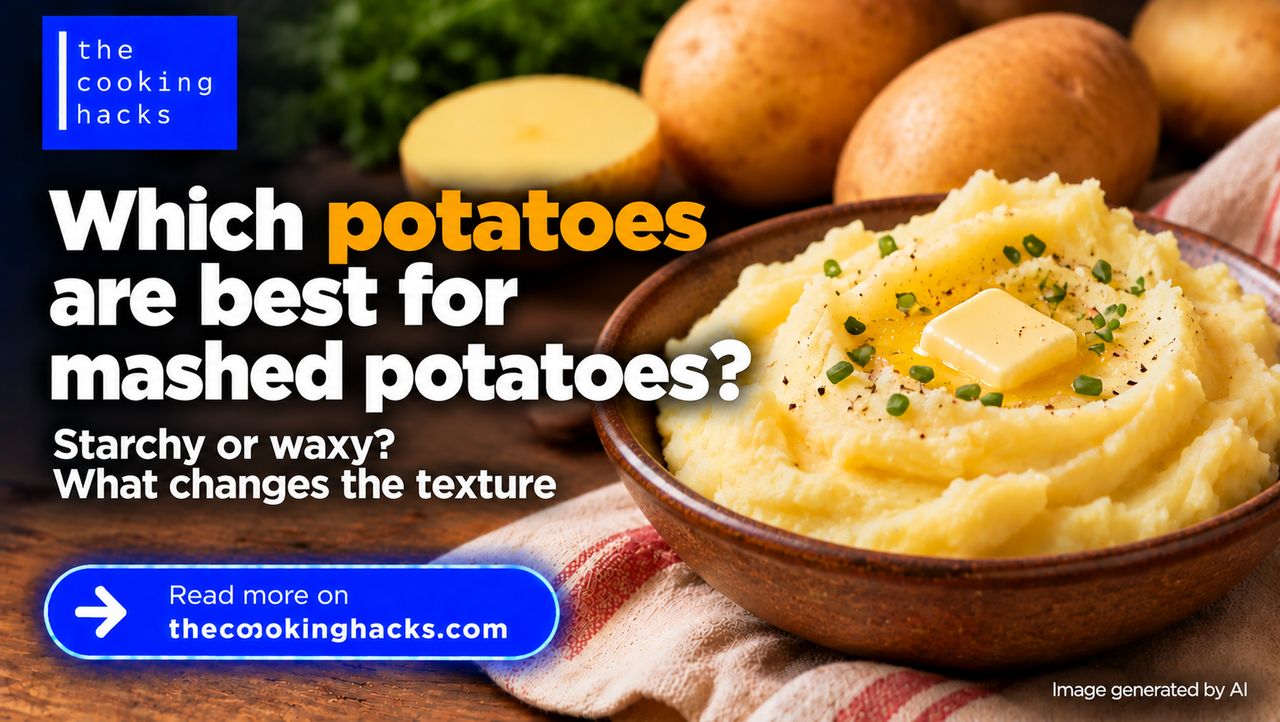
Mashed potatoes can turn out light and fluffy, rich and creamy, or unexpectedly dense and gluey. The ingredients may be almost identical, yet the finished dish can feel completely different. Choosing the right potatoes for mashed potatoes matters, because different varieties have different starch characteristics and respond differently to cooking and mashing.
A 2026 study published in the Journal of Food Science examined 12 Russet potato cultivars, comparing starch composition, cell-wall characteristics and other properties associated with texture. The findings help explain why potatoes behave differently during processing, although the research does not establish a definitive ranking of the best supermarket potatoes for homemade mash.
Are starchy or waxy potatoes better for mashing?
For light, fluffy mashed potatoes, starchy or floury potatoes are generally the better starting point. They tend to break down more readily after cooking, making them easier to mash without excessive handling.
Waxy potatoes hold their shape more firmly. That makes them useful for potato salads, dishes with distinct pieces and some boiled preparations, but they can produce a denser mash. They are not unsuitable in every case: the preferred texture depends on whether the goal is a fluffy side dish, a smooth creamy mash or a more rustic preparation.
The terminology also varies by market. In the United Kingdom, shoppers commonly encounter descriptions such as floury, fluffy or suitable for mash. In the United States, potatoes are often described as starchy, all-purpose or waxy. These labels provide a more useful guide than skin colour alone.
Why does potato starch affect the final texture?
Potatoes contain starch within their cells. During cooking, the starch absorbs water and undergoes changes that contribute to the texture of the cooked potato. At the same time, the structure of the surrounding plant tissue changes, affecting how readily the potato softens and separates.
The 2026 research investigated several factors, including amylose content, starch thermal properties and enzymes involved in cell-wall structure. The researchers found differences among the Russet cultivars, supporting the idea that potato texture is influenced by multiple interacting characteristics.
However, starch content alone cannot reliably predict the finished mash. The study also found that some measured relationships were relatively weak and should be considered supporting indicators rather than definitive selection criteria. Cooking conditions and the way potatoes are handled remain important.
Which potatoes should you buy in the UK and US?
In the UK, Maris Piper and King Edward are familiar choices for a fluffy mash because they are commonly valued for their floury cooking characteristics. Labels indicating that potatoes are suitable for mashing can also help when a particular variety is unavailable.
In the US, Russet potatoes are widely used for fluffy mashed potatoes, while Yukon Gold is a popular choice when a naturally rich, creamy texture is preferred. These are practical culinary distinctions, not the results of a head-to-head home-cooking comparison in the 2026 study.
It is worth remembering that the study examined 12 specific Russet cultivars, not every potato sold in either country. The researchers’ findings should not be used to claim that Maris Piper, King Edward or Yukon Gold was scientifically proven superior by this research.
For everyday shopping, choose potatoes labelled for mashing and match the variety to the texture you want, rather than assuming that one named potato is always best.
How can you prevent mashed potatoes from becoming gluey?
Even suitable potatoes can produce disappointing results if they are overworked. After cooking, the potatoes should be tender enough to mash easily. Drain them thoroughly, then mash or rice them while still warm.
A potato ricer, food mill or hand masher is generally preferable to prolonged blending. High-speed processing can damage potato cells and release more starch into the mixture, contributing to a sticky, elastic texture.
Butter and milk can then be incorporated gradually to reach the desired consistency. For a fluffy mash, gentle handling is particularly important. A smoother, richer mash may call for a different balance of ingredients, but vigorous mixing is not a reliable shortcut to creaminess.
The practical distinction is that the potato variety helps determine the starting texture, while cooking and mashing influence what happens to it.
Can you make good mashed potatoes with waxy varieties?
Yes. Waxy potatoes can be mashed, and some people prefer their firmer, denser consistency. They may require more care to produce an even texture, particularly if the goal is a very smooth side dish.
If waxy potatoes are already in the kitchen, there is no need to discard them or change the menu. Cook them until fully tender, mash gently and add the remaining ingredients gradually. Avoid extended blending in an attempt to force a fluffy texture.
For recipes that rely on very light mashed potatoes, however, a floury or starchy variety is usually a more straightforward choice.
What does the 2026 Russet potato study actually prove?
The researchers analysed 12 Russet cultivars, measuring biochemical and physical characteristics relevant to food processing. Their work identified relationships among starch properties, cell-wall enzymes, mineral composition and thermal behaviour.
The findings are useful for understanding why cultivars differ, but the study was not a consumer taste test of mashed potatoes made in home kitchens. It also did not establish that one single variety is universally best for every potato dish.
The most useful takeaway is therefore practical rather than prescriptive: select a potato suited to mashing, cook it thoroughly and avoid overworking it. Those choices help you achieve a consistent result while leaving room for personal preference, whether you want a fluffy mash or a richer, creamier one.
Are Russet or Yukon Gold potatoes better for mashed potatoes?
Russet potatoes are generally preferred for a light, fluffy mash, while Yukon Gold potatoes are often chosen for a richer, creamier texture. The better choice depends on the result you want.
Can you use waxy potatoes for mashed potatoes?
Yes. Waxy potatoes can be mashed, but they usually produce a denser texture than starchy varieties. Mash them gently rather than blending them for a long time.
Why do mashed potatoes turn gluey?
Overworking cooked potatoes, particularly with a blender or food processor, can release excess starch and create a sticky texture. A potato ricer or hand masher is generally a better choice.
If you don't want to miss the important news, subscribe to The Cooking Hacks Telegram channels:
- Food Recall UK, receive news about food recalls to have a safe pantry
- Offers this week UK, to find out what are the latest offers from supermarkets