Food packaging has traditionally been designed to contain and protect a product. Researchers are now developing systems that can do something more: detect certain changes in the food or its surroundings and turn those changes into information.
A new review published in Food Control maps this emerging field around four functions: perception, response, communication and integration.
The technologies range from simple color-changing indicators to electronic sensors, wireless communication and AI-assisted systems.
That does not mean ordinary food packages are about to become miniature laboratories. One of the review’s important conclusions is that the technologies are at very different stages of development, and many still need substantial validation before widespread commercial use.
A food label that changes color
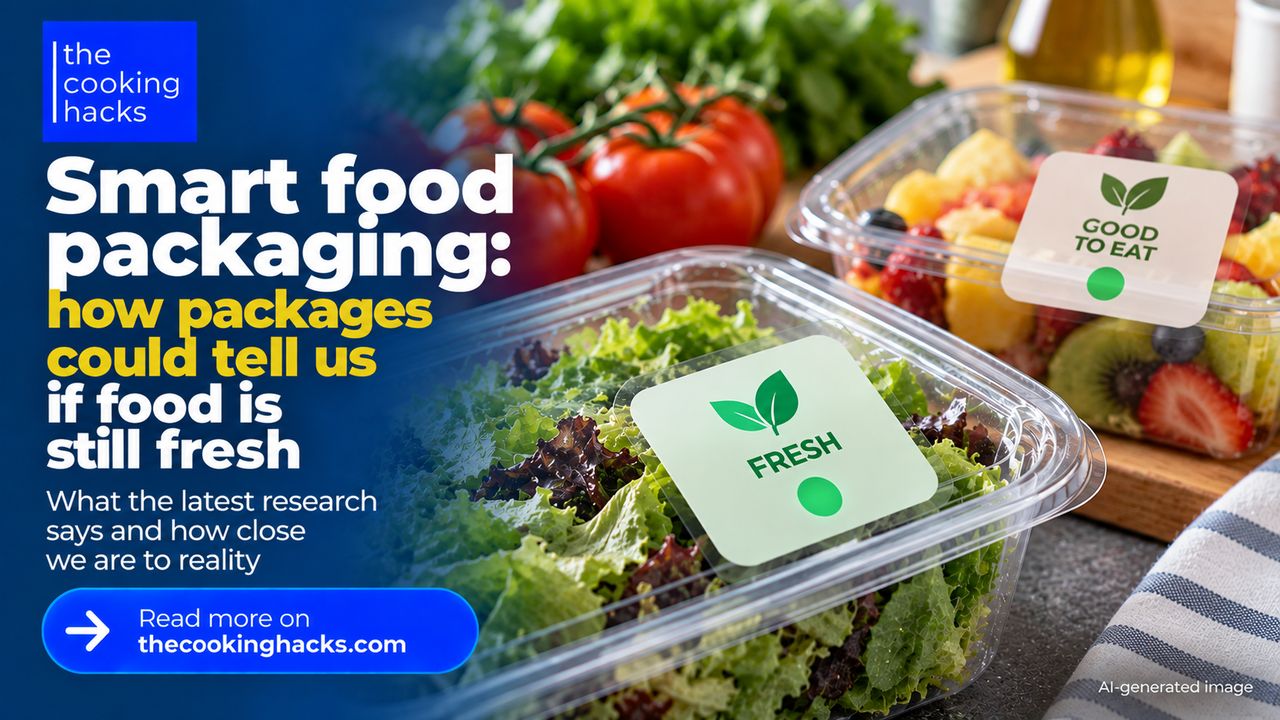
Colorimetric indicators are among the most intuitive forms of smart packaging. They use materials that respond to particular chemical changes and translate that response into a visible color shift.
Some systems reviewed in the paper use anthocyanins, naturally occurring pigments whose color can change with their chemical environment. Researchers have explored using these properties to create indicators that respond to changes associated with food quality.
The idea sounds simple: instead of relying only on printed information, consumers might one day be able to see an indicator change as conditions inside the package change.
Making that signal dependable is harder. High humidity, pigment stability, interference from other compounds and sensor selectivity can all affect the result. A useful indicator therefore needs to respond reliably to the intended change rather than simply producing an eye-catching color effect.
Sensors can look for signs associated with spoilage
Other smart packaging systems are designed to detect specific gases or volatile compounds in the package headspace.
The review covers colorimetric, fluorescent, hydrogel-based and electronic sensors, each using different mechanisms to turn chemical or physical changes into measurable signals.
Some experimental systems already combine sensing with wireless communication. One example discussed in the review was tested with spinach and incorporated NFC technology, allowing sensor information to be read wirelessly. The system used a smartphone-readable interface and did not depend on a conventional battery for communication.
This points toward a very different kind of package: one that does not merely carry a printed label but can provide digital information about the conditions it has detected.
Could AI help estimate remaining shelf life?
Researchers are also experimenting with combining sensors and machine-learning models. One study included in the review used multispectral sensing and edge-based machine learning to estimate shelf life and several quality parameters in fresh dates stored under different packaging conditions and temperatures.
The important step here is interpretation. Instead of simply reporting a sensor measurement, an algorithm attempts to turn a collection of measurements into information that could potentially help with storage and supply-chain decisions.
In the future, systems like these might help retailers and producers manage products according to their actual conditions rather than relying exclusively on static information.
They could also potentially contribute to reducing food waste, although that benefit needs to be demonstrated against the environmental and economic cost of the technology itself.
How close is smart packaging to supermarket shelves?
The answer depends heavily on the technology. Conventional passive packaging is already highly mature, while many of the intelligent systems covered by the review remain at prototype or intermediate technology-readiness levels.
Challenges include sensor selectivity, long-term stability, calibration, performance in real foods, large-scale manufacturing and integration with suitable packaging materials.
There is also an environmental trade-off. A package designed to reduce food waste could become harder to recycle if it contains additional sensors, electronics or complex materials. The authors therefore emphasize the need for life-cycle assessments rather than assuming that a “smart” package is automatically a more sustainable one.
A freshness sensor is not the same as a food-safety test
This distinction is especially important for consumers. A sensor may be designed to detect one particular marker or environmental change. That does not mean it has tested the food for every pathogen or hazard that could make someone ill.
The review identifies continuing challenges involving selectivity, interference, realistic food environments and standardized performance.
A future package displaying a positive freshness signal should therefore not automatically be treated as proof that a food is safe regardless of storage instructions or other food-safety considerations.
What smart packaging could change is the amount of information available about a product.
Instead of merely containing and protecting food, tomorrow’s packages may increasingly be able to sense certain changes, communicate what they detect and feed that information into digital systems.
The technology already exists in many experimental forms. The harder challenge now is determining which solutions can become reliable, affordable, sustainable, regulatorily acceptable and practical enough to move from the laboratory to everyday food packaging.
If you don't want to miss the important news, subscribe to The Cooking Hacks Telegram channels:
- Food Recall UK, receive news about food recalls to have a safe pantry
- Offers this week UK, to find out what are the latest offers from supermarkets