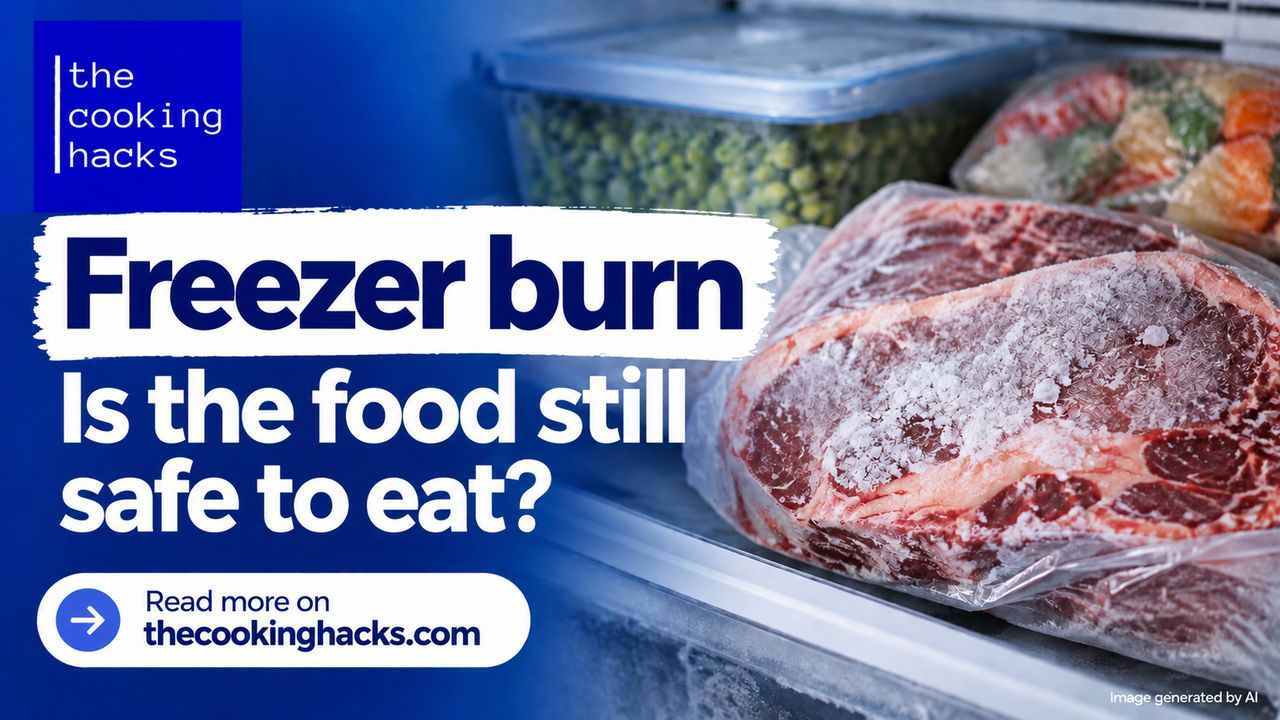
You open the freezer and find a steak with dry, discoloured patches, or vegetables covered with ice crystals and a visibly dehydrated surface. This is commonly known as freezer burn.
The most important point is that freezer burn on its own does not make food unsafe. It is primarily a quality problem caused when air reaches the surface of frozen food and moisture is gradually lost.
That does not mean every food that has spent a long time in the freezer is automatically safe. Freezer burn needs to be distinguished from problems caused by poor storage, partial thawing or an interruption in the cold chain.
What is freezer burn and why does it happen?
Freezer burn develops when moisture is lost from parts of a frozen food during storage. The affected surface becomes dehydrated and may look dry, pale, greyish or brown. Ice crystals can also become more noticeable inside the packaging.
Exposure to air is one of the main factors. A loosely closed bag, unsuitable wrapping or a container containing a large amount of air can all make freezer burn more likely.
The USDA Food Safety and Inspection Service explains that freezer burn occurs when air comes into contact with the surface of frozen food and describes the result as a loss of quality rather than a food safety problem.
Can you eat food with freezer burn?
Yes, if freezer burn is genuinely the only issue and the food has remained properly frozen.
The affected areas may be drier, tougher and less pleasant to eat, but freezer burn itself does not mean that the food has become unsafe. With meat and other solid foods, heavily dried sections can be trimmed away before or after cooking.
If freezer burn affects most of the product, however, the loss of texture and flavour may be significant enough that the food is no longer enjoyable to eat.
It is also important to remember that freezing does not sterilise food. Microorganisms can survive freezing and may start multiplying again once temperatures rise during thawing.
Freezer burn and food safety are not the same thing
Appearance alone cannot tell us the full history of a frozen food.
A product can have freezer burn even though it has remained frozen at a safe temperature throughout storage. In that situation, the main issue is likely to be quality, including changes in texture, juiciness, flavour or colour.
The opposite is also possible. Food may show no obvious freezer burn but may have been handled incorrectly or allowed to thaw for too long.
The UK Food Standards Agency explains that freezer burn is caused by exposure to cold, dry air and primarily affects food quality. This is why the presence or absence of dry patches should not be used as the only way to decide whether frozen food is safe to eat.
If there is uncertainty about whether a product remained frozen, that storage history matters more than the freezer burn itself.
How to prevent freezer burn
Reducing contact with air is one of the most effective ways to limit freezer burn.
Food should be tightly wrapped or placed in containers suitable for freezing, with as little excess air as practical. Portioning food before freezing can also help because only the amount needed has to be thawed later.
Useful steps include:
- freezing food while it is fresh and in good condition;
- using freezer-safe bags, wraps or containers;
- removing excess air where possible;
- labelling packages with the freezing date;
- avoiding unnecessarily long storage periods.
Temperature matters too. Around 0°F or -18°C is the standard reference point for domestic freezer storage. The Cooking Hacks has also looked at research examining frozen-food storage at -15°C instead of -18°C, separating the experimental findings from the usual guidance for home freezers.
What should you do when you find freezer burn?
A few dry patches do not automatically mean that the whole food needs to be discarded.
If the product has remained properly frozen, first consider how much its quality has deteriorated. Small, dry areas can sometimes be trimmed from solid foods. If most of the product is badly dehydrated, hard or noticeably changed, it may simply no longer be worth eating.
How long the food has been frozen can also affect its quality. The USDA provides recommended storage times for frozen foods, noting that these time limits are mainly about maintaining quality rather than determining how long frozen food remains safe.
Once food is thawed, its normal characteristics still matter. Unusual or rancid smells, or other signs of deterioration, should not automatically be dismissed as freezer burn.
The key distinction is straightforward: freezer burn is mainly evidence of quality loss, not proof that frozen food has become unsafe. Food safety also depends on how the product was frozen, stored and thawed.
FAQ
Is freezer burn mould?
No. Freezer burn is caused primarily by moisture loss and exposure to cold, dry air. It is not mould growth.
Can you eat freezer-burned meat?
If the meat has remained properly frozen and freezer burn is the only issue, freezer burn itself does not make it unsafe. The driest parts can be trimmed away, although texture and flavour may have deteriorated.
Why are there so many ice crystals inside the bag?
Moisture movement and exposure to air can contribute to both dehydration of the food surface and the formation of ice crystals inside the package.
What temperature should a home freezer be?
A common reference temperature for home freezer storage is 0°F or -18°C. Using both units makes the guidance applicable to readers in the US as well as the UK and other markets.
Does freezer-burned food always need to be thrown away?
No. If the food has remained properly frozen and freezer burn is the only problem, the main concern is quality. If there are doubts about how the food was stored or whether it partially thawed, those issues need to be considered separately.
If you don't want to miss the important news, subscribe to The Cooking Hacks Telegram channels:
- Food Recall UK, receive news about food recalls to have a safe pantry
- Offers this week UK, to find out what are the latest offers from supermarkets