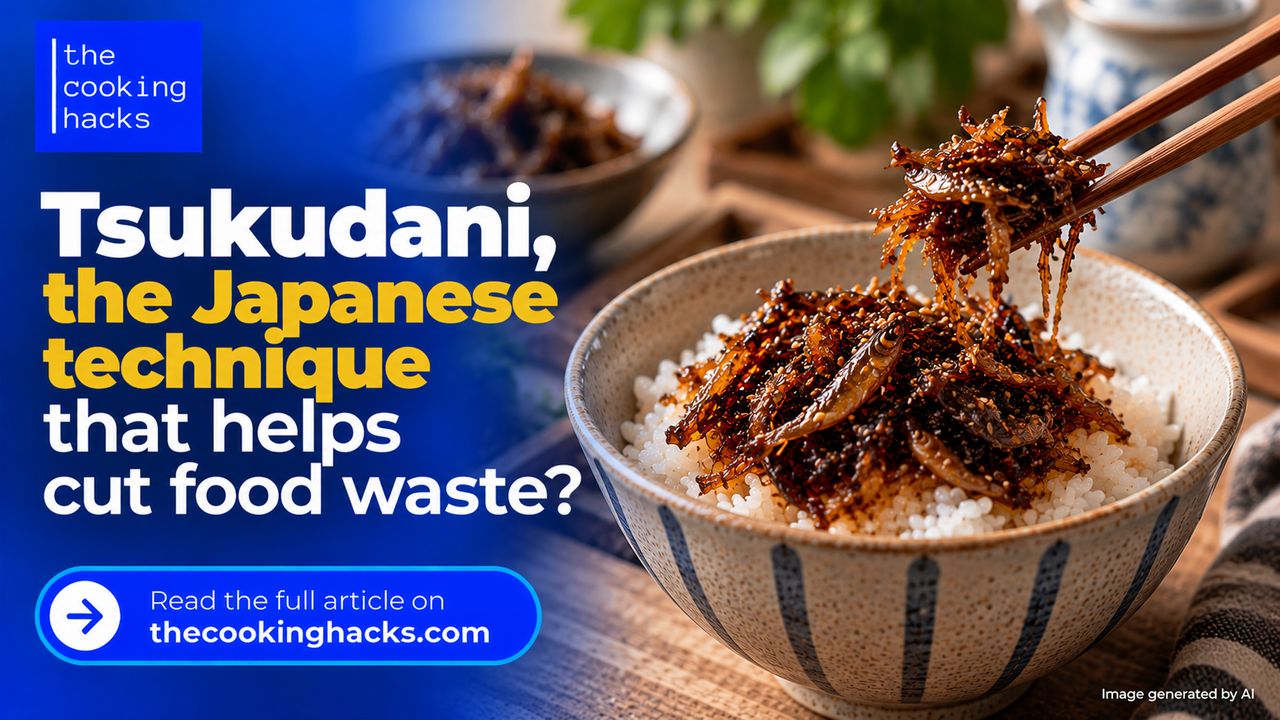
In Japan, small fish, seaweed, mushrooms and even some plants can be turned into tsukudani, an intensely flavoured preparation made by simmering ingredients with soy sauce and mirin or sugar. The result is salty, sweet and rich in umami, and is usually eaten in small amounts alongside other foods.
A recent paper in the International Journal of Gastronomy and Food Science explores the history and principles behind the technique. It also considers a surprisingly modern use for it: bringing more flavour to plant-forward cooking while potentially helping make better use of food that might otherwise go to waste.
What exactly is tsukudani?
The basic idea is to simmer an ingredient in a strongly flavoured liquid, usually based on soy sauce with mirin or sugar. As it cooks, the liquid reduces and the flavours become increasingly concentrated.
Traditional versions can be made from small fish, shellfish, nori and kombu seaweed, mushrooms and other plant foods. Some regional varieties are even made with insects. Tsukudani is generally eaten in small quantities with rice, used in onigiri or served with ochazuke.
Japan’s Ministry of Agriculture, Forestry and Fisheries describes it as a Tokyo speciality associated with Tsukuda Island, with a history stretching back to the Edo period.
Preservation was an important part of the technique. MAFF explains that concentrated seasoning, simmering and the resulting reduction in water activity can help improve the keeping quality of traditionally processed foods such as tsukudani.
Why does tsukudani taste so intense?
Tsukudani brings together saltiness, sweetness and umami. As the cooking liquid reduces, these flavours become concentrated, while caramelisation and Maillard reactions can add further aromas.
This is why it makes more sense to think of tsukudani as a condiment or small side dish rather than a large serving of fish, vegetables or mushrooms.
The 2026 paper also explores its potential in plant-forward cooking. A small amount of an umami-rich preparation can add depth and complexity to otherwise mild plant ingredients.
Could tsukudani help reduce food waste?
This is where an old preservation technique starts to look particularly modern. The author suggests that the principles behind tsukudani could be applied to a wider variety of ingredients and explored as part of a low-waste approach to cooking.
That does not simply mean covering leftovers in soy sauce. The more interesting idea is to turn small quantities of ingredients into a strongly flavoured condiment, taking inspiration from a technique originally connected with extending the usefulness of food.
There is an important safety distinction, however. The paper discusses the culinary tradition and possible contemporary applications of tsukudani, but it does not establish a universal home-preservation method that makes any homemade preparation safe to keep at room temperature. Cooking something in a tsukudani style and safely preserving it for long-term storage are not the same thing.
If you don't want to miss the important news, subscribe to The Cooking Hacks Telegram channels:
- Food Recall UK, receive news about food recalls to have a safe pantry
- Offers this week UK, to find out what are the latest offers from supermarkets