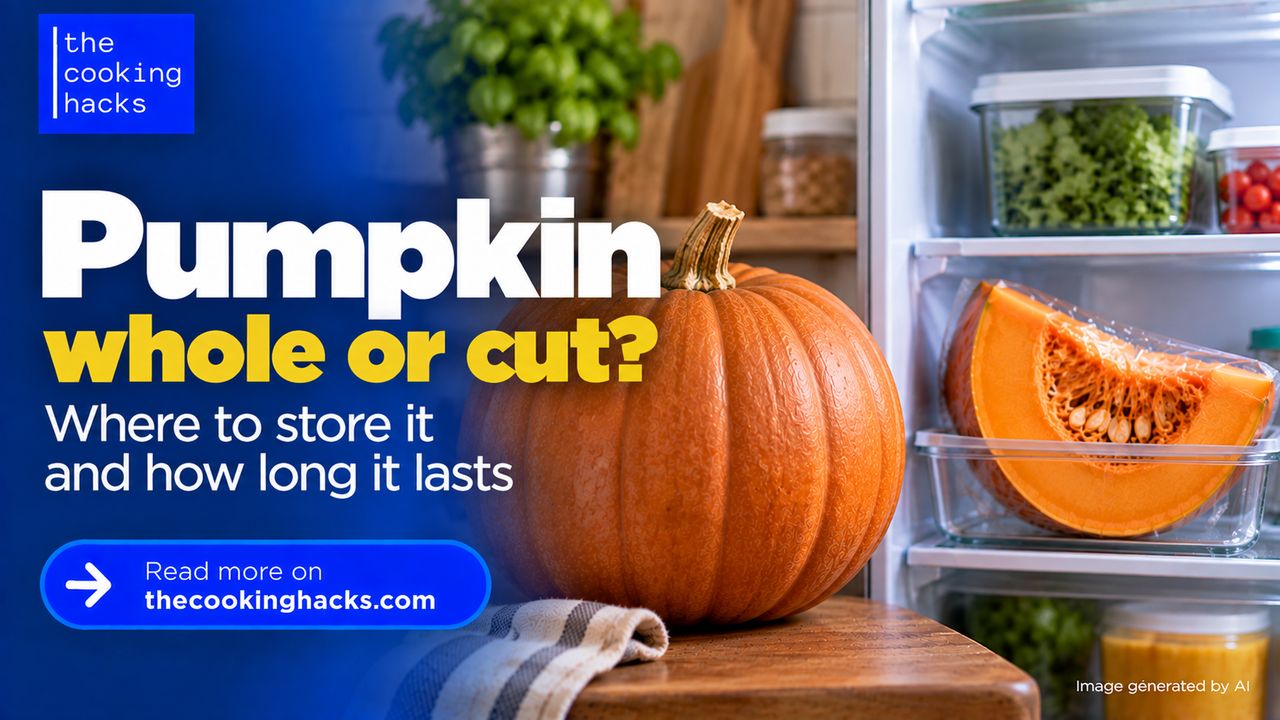
A whole pumpkin or winter squash can keep for several months, while cut squash needs to be refrigerated and used much sooner. The difference is not just whether the skin has been broken: variety, maturity, rind condition and storage conditions all affect shelf life. That is why putting an intact winter squash straight into the refrigerator is not necessarily the best choice for long-term storage.
Where should you store a whole pumpkin or winter squash?
Winter squash intended for storage should be mature and in good condition, with a hard, intact rind and no significant cuts or bruises. For long-term storage, the Royal Horticultural Society recommends a well-ventilated location between 10 and 15°C (50–60°F). Depending on the cultivar and conditions, some pumpkins and winter squashes can keep for up to six months.
That upper limit should not be treated as an expiry date for every squash. Storage life varies considerably by type. The University of Minnesota Extension lists markedly different ideal storage lives for acorn, butternut, buttercup, Hubbard and kuri squash, ranging from about one month to six months. The practical lesson is that the variety matters as much as the calendar.
What changes once winter squash is cut?
Once the rind has been cut, the remaining squash needs different treatment. The exposed portion should be covered or wrapped and moved to the refrigerator rather than being kept under the same conditions as a whole squash.
The Utah State University Extension specifically recommends storing whole winter squash in a cool, dry place and refrigerating cut squash after wrapping it. This distinction is important: storage times measured in months apply to intact produce, not to a leftover cut piece.
Does a whole pumpkin belong in the fridge?
For long-term storage, “cool” does not necessarily mean refrigerator-cold. The commonly recommended range for whole winter squash is around 50–60°F (10–15°C), which is considerably warmer than a normal refrigerator.
This means a cool, dry and well-ventilated storage area may be more appropriate for an intact winter squash. If the squash has already been cut, however, refrigeration is the appropriate choice.
Keep winter squash away from ripening fruit
Where you place a whole winter squash also matters. Apples, pears and other ripening fruits release ethylene, and prolonged exposure can shorten the storage life of winter squash. Keeping them apart is therefore useful when you are trying to store squash for an extended period.
This is most relevant for long-term storage. If you are planning to cook the squash within a short time, the priority is simply to keep it in good condition and check it before use.
How can you tell if stored squash is deteriorating?
Check stored pumpkins and winter squashes regularly rather than relying only on how long they have been sitting there. Softening, damaged areas and signs of rot are reasons to inspect the fruit carefully, and damaged squash generally will not keep as long as an intact one.
Variety, maturity and previous handling are not always known when you buy squash from a store, so a maximum storage period should never replace checking the food itself.
In short
A whole, mature and undamaged pumpkin or winter squash can keep for months when stored in a cool, dry and ventilated location, although actual shelf life varies widely by variety. Once it is cut, the remaining squash should be covered, refrigerated and used much sooner. The key distinction is therefore not simply “fridge or no fridge,” but whole versus cut squash.
FAQ
Should a whole pumpkin be kept in the refrigerator?
Not necessarily. For long-term storage, mature whole pumpkins and winter squashes are generally better kept in a cool, dry and well-ventilated location around 50–60°F (10–15°C).
How long does a whole pumpkin or winter squash last?
Depending on the variety and storage conditions, winter squash can keep for anything from several weeks to several months. Some varieties can reach about six months under suitable conditions.
How should cut winter squash be stored?
Cover or wrap the cut portion and keep it in the refrigerator. The long storage periods associated with winter squash refer to intact produce.
Can cut pumpkin be stored at room temperature?
Not for storage. Once pumpkin or winter squash has been cut, the remaining portion should be refrigerated.
Why do some winter squashes last longer than others?
Different varieties have different storage characteristics. Maturity, rind condition, temperature and previous handling also influence how long an individual squash will keep.
If you don't want to miss the important news, subscribe to The Cooking Hacks Telegram channels:
- Food Recall UK, receive news about food recalls to have a safe pantry
- Offers this week UK, to find out what are the latest offers from supermarkets